
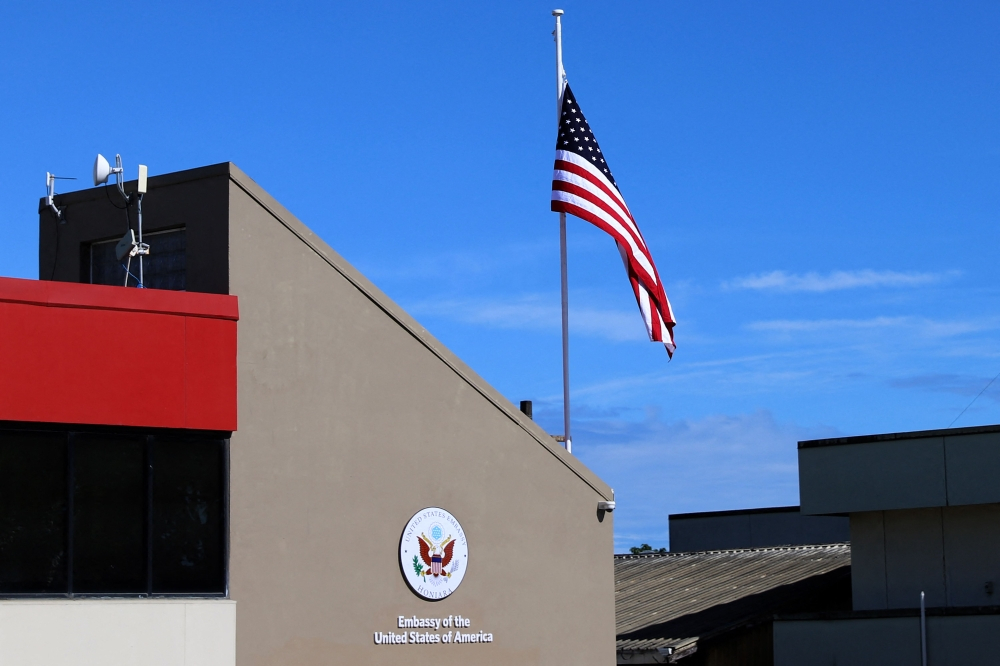
As tensions continue to grow across the Middle East, United States embassies in several countries have issued fresh security warnings, urging American citizens to remain cautious and prepare for possible developments that could affect travel and safety.
Embassies in Bahrain, Egypt, Iraq, Israel, Jordan, Kuwait, Lebanon, Oman, Qatar, Saudi Arabia, and the United Arab Emirates advised US citizens to consider leaving the region if the situation escalates further.
The warning came shortly after US President Donald Trump issued a strong statement threatening severe action against Iran, increasing concerns over the possibility of a wider regional conflict.
The ongoing confrontation between Iran and the United States has already disrupted daily life for many people across the region, affected international travel, and created uncertainty in global energy markets.
“Americans in the region should consider departing, or be prepared to depart should there be escalation,” the security alert stated.
The embassies also encouraged citizens to regularly check flight schedules, follow instructions from local authorities, and remain prepared for possible airport closures, flight cancellations, and unexpected travel restrictions.
Growing concerns over safety and regional stability
US officials have advised Americans in Jordan to avoid visiting military facilities following recent missile threats, while citizens in Israel have been encouraged to identify nearby bomb shelters and emergency safety locations.
The US Embassy in Jerusalem highlighted concerns about unpredictable developments, stating that Iran’s recent actions demonstrated the possibility of attacks expanding to areas that were previously not considered major targets.
Meanwhile, the US Embassy in Beirut confirmed that it remains under “ordered departure status,” with non-essential government personnel and family members relocated outside Lebanon due to security concerns.
Iran warns against further military involvement
Iran has accused Washington of increasing tensions and warned countries supporting the United States that they could become involved in the consequences of the conflict.
Ali Abdollahi, head of Iran’s military central command, said that nations acting as a “defensive shield” for the US could face the impact of the conflict.
Iranian officials also warned against attacks targeting the country’s infrastructure, saying any direct strikes could create broader consequences.
Mohammad Mokhber, adviser to Iran’s supreme leader, said Iran would respond strongly to any threats against its critical facilities.
Shipping routes face growing pressure
The conflict has also raised concerns about international shipping routes, particularly the Strait of Hormuz, one of the world’s most important energy transportation channels.
A drone attack recently damaged a US-owned gas vessel near an Egyptian port, while maritime officials reported that an unidentified projectile struck a tanker near Oman.
The incidents have increased concerns among shipping companies operating in the region, where security risks have already affected trade movement.
Maritime tracking company Kpler reported that traffic through the Strait of Hormuz has significantly decreased as operators closely monitor security developments, shipping routes, and diplomatic discussions.
The Bab el-Mandeb Strait, another crucial maritime route connecting the Red Sea with the Indian Ocean, has also drawn attention due to regional security concerns.
A conflict with global consequences
The Middle East crisis continues to impact millions of people, with governments, businesses, and international communities watching closely for signs of further escalation.
The situation has created uncertainty not only for regional security but also for global markets, energy supplies, aviation, and international trade.
As diplomatic efforts continue, many countries are urging citizens and organizations to remain informed, prepared, and cautious while developments unfold.
The coming days could play a critical role in determining whether tensions move toward de-escalation or a broader regional confrontation.