
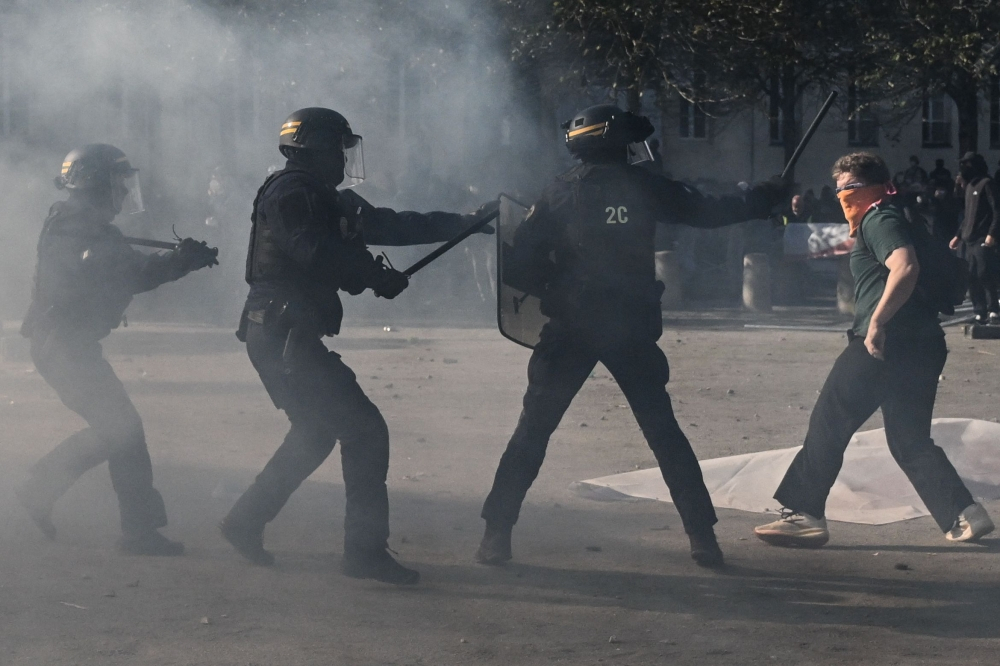
Paris authorities have reported a record 855 arrests following a day of violent protests, clashes with police and widespread looting that affected the French capital and several other cities across the country.
Police confirmed the arrests on Sunday, while the Paris prosecutor’s office reported that more than 500 people remained in custody as investigations continued. The scale of the arrests reflects the seriousness of the unrest, which saw confrontations in the streets, fires breaking out in public areas and businesses affected by looting.
Lamia El Aaraje, Paris’s deputy mayor, described the violence as unprecedented in her experience, saying the capital had faced a level of unrest she believed it had never witnessed before.
According to the Paris prosecutor’s office, 517 people were being held in custody at the time of its update. Of these, 346 were adults and 171 were minors. Officials stressed that the figures were provisional and could change as police continued processing arrests and examining individual cases.
Authorities said arrests continued throughout the night and into the early morning, lasting until 6 a.m. local time on Sunday. The overnight operation followed widespread disorder that had placed significant pressure on law enforcement agencies.
The prosecutor’s office identified suspected handling of stolen goods, alleged involvement in groups intending to commit violence, and vandalism among the main reasons for the arrests. Investigations are expected to determine the circumstances surrounding each case and establish individual responsibility.
The unrest extended beyond Paris, with several other French cities also experiencing clashes, fires and reports of looting. The incidents raised concerns about public safety, damage to property and the impact of violence on local communities and businesses.
For residents and shop owners, such scenes can mean more than a night of disruption. Damaged storefronts, lost income, disrupted transport and fears about personal safety can leave lasting consequences long after the streets become quiet again.
As authorities assess the aftermath, the challenge will be to restore public confidence, establish accountability and prevent further violence while ensuring that investigations follow the law. Behind the arrest figures are communities seeking safety, businesses trying to recover and individuals whose cases must be assessed fairly.
Ultimately, peaceful public expression and public safety both matter. Protecting the right to demonstrate while preventing violence and looting remains a difficult but essential responsibility for authorities and society alike.