
Puducherry Lieutenant Governor K. Kailashnathan has suggested that Jammu and Kashmir could strengthen its efforts to attract industrial investment by offering targeted incentives, competitive power rates and stronger transportation connectivity.
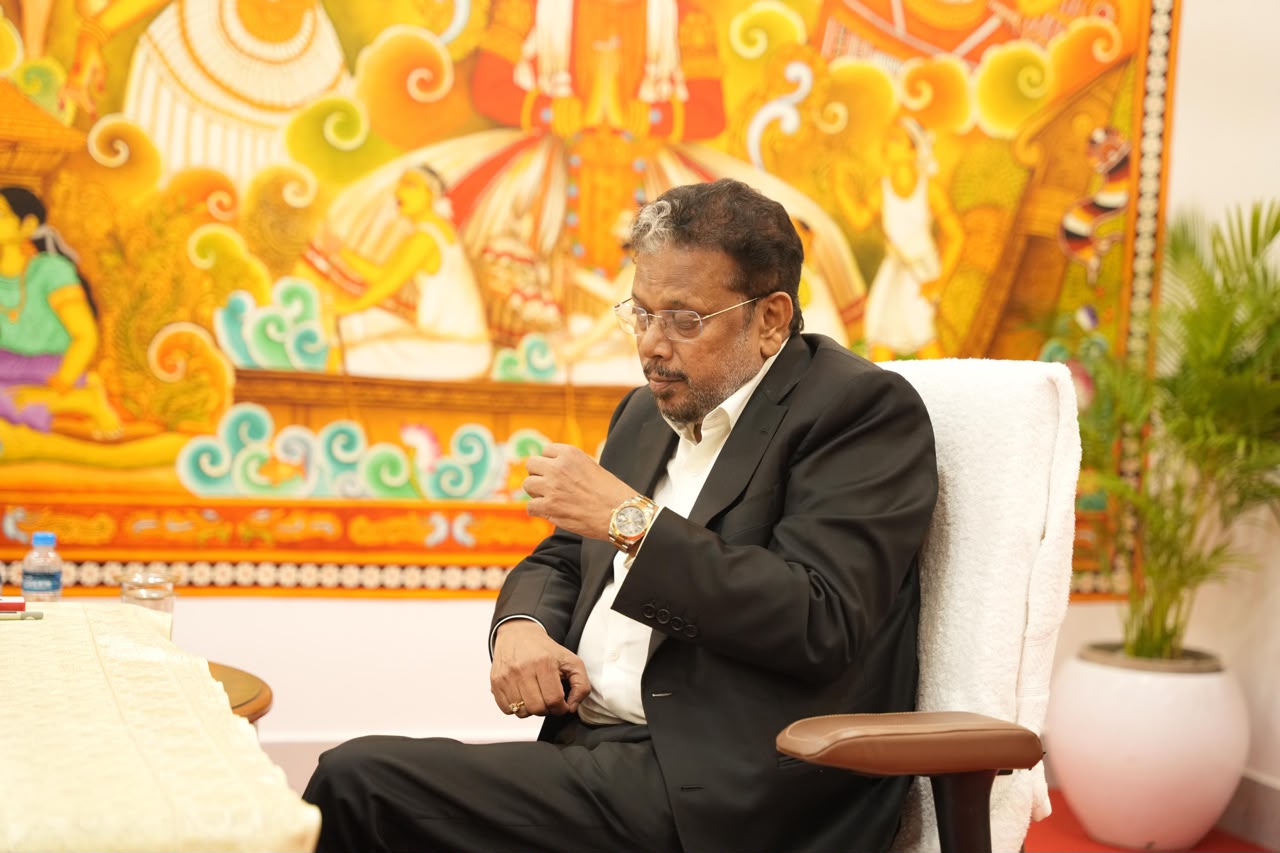
Kailashnathan made the remarks during an interaction with a delegation of journalists from Kashmir at Lok Nivas in Puducherry on Wednesday. The delegation is visiting Tamil Nadu and Puducherry as part of a five-day media exposure tour organised by the Press Information Bureau, Government of India, to understand development initiatives, infrastructure projects and public welfare programmes.
During the interaction, the Lieutenant Governor discussed Puducherry’s development priorities, investment opportunities, healthcare infrastructure and tourism plans, while also responding to questions about the challenges facing Jammu and Kashmir in expanding its industrial base.
On Jammu and Kashmir, Kailashnathan suggested that incentives such as temporary tax holidays and relatively inexpensive electricity could help make the Union Territory more attractive to investors. He also highlighted the importance of increasing power generation and strengthening connectivity as part of a broader strategy for industrial development.
The suggestion comes as Jammu and Kashmir continues to look beyond its traditional economic strengths in tourism and horticulture and seeks to create more opportunities in manufacturing, services and other sectors. For potential investors, the availability and cost of electricity, ease of transportation and access to markets can be important considerations when deciding where to establish new businesses.
Kailashnathan also pointed to infrastructure development as a factor that can transform the economic prospects of regions that were once difficult to access. In his remarks, he referred to the development of Ekta Nagar in Gujarat, where improved road and rail connectivity has contributed to greater tourist movement and new livelihood opportunities.
The discussion also turned toward Puducherry’s own plans for economic growth. Kailashnathan spoke about his vision of developing the Union Territory into a significant medical tourism destination by making better use of its healthcare and educational infrastructure.
Puducherry has a notable healthcare ecosystem, including JIPMER, an institution of national importance. The administration sees healthcare infrastructure and medical education as potential foundations for attracting visitors seeking specialised treatment while also supporting related economic activity.
Connectivity was another major focus of the interaction. The visiting journalists were briefed about infrastructure projects aimed at improving Puducherry’s road, rail and air links. The airport runway expansion, along with planned improvements to road and railway infrastructure, is expected to strengthen the Union Territory’s ability to handle more visitors and support economic activity.
For Jammu and Kashmir, connectivity remains an important part of the industrial and tourism conversation. Improvements in railway access have strengthened links with the rest of the country, while continued investment in roads and air connectivity is important for businesses, tourists and local communities.
The interaction therefore offered more than a discussion about investment incentives. It provided the Kashmir-based journalists an opportunity to examine how another Union Territory is approaching healthcare, tourism, infrastructure, connectivity and economic development, and to consider which approaches may be relevant to Jammu and Kashmir.
The delegation later visited the Auroville Foundation near Puducherry, where journalists interacted with residents and members and learned about the township’s concept, functioning and activities.
The five-day media tour is taking the journalists to institutions, infrastructure projects and development initiatives across Tamil Nadu and Puducherry. The programme is intended to give them a first-hand understanding of government schemes, public welfare initiatives and development projects, including their implementation at the grassroots level.
For the journalists from Kashmir, the journey also provides an opportunity to look beyond familiar headlines and see development on the ground. Behind every infrastructure project, hospital, railway connection or investment proposal are people looking for better opportunities, more jobs and a stronger local economy.
That is ultimately why the discussion around incentives, affordable electricity and connectivity matters. Industrial investment is not simply about attracting companies; it can also be about creating livelihoods, strengthening communities and giving young people more reasons to build their futures where they live.