

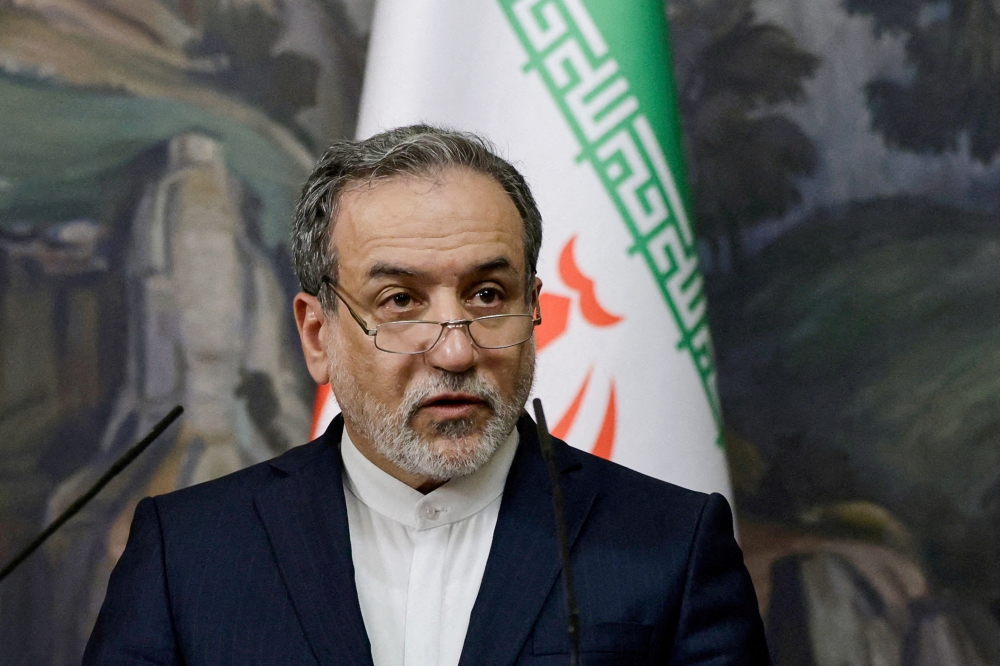
Iran’s Foreign Minister Abbas Araghchi declared today that his country is prepared to continue fighting for as long as necessary, casting doubt on US President Donald Trump’s prediction that the Gulf conflict would be over “soon.”
Araghchi, one of Iran’s top officials, also ruled out negotiations with Washington, emphasizing Tehran’s determination amid a new wave of attacks on US-allied Gulf nations, which came just hours after Trump reassured the public of a rapid resolution.
Trump’s comments briefly steadied global markets, with stock indices in Tokyo and Seoul rising and oil prices dropping by as much as five percent after crude briefly soared past US$100 per barrel.
“It’s going to end soon, and if it starts up again, they’ll be hit even harder,” Trump said during a Florida press conference. He described the campaign as a “short-term excursion” and threatened an attack of “incalculable” size should Iran attempt to block oil supplies.
“We will hit them so hard that it will not be possible for them—or anyone aiding them—to ever recover that section of the world, if they act,” Trump warned.
However, in an interview with PBS News, Araghchi responded, “The firings continue, and we are prepared. We are well prepared to continue attacking with our missiles as long as needed.” The Revolutionary Guards echoed this stance, asserting they would “determine the end of the war.”
Araghchi also recalled previous failed talks with the US, saying, “We have a very bitter experience of talking with Americans. I don’t think negotiating with them is on our agenda anymore.”
Rising Tensions in the Gulf
Earlier, Iranian attacks targeted Gulf nations again. The United Arab Emirates reported active missile and drone threats, while Bahrain instructed citizens to take shelter as sirens blared. Both Saudi Arabia and Kuwait said they intercepted and destroyed incoming drones.
Inside Iran, local media reported fresh strikes in Tehran and Khomein, while Israel struck an Iranian missile launcher following an Iranian barrage that triggered alarms across several regions.
The conflict has created uncertainty in global markets, driving fuel shortages and stoking fears of rising inflation. In response, Trump announced a temporary waiver of some oil sanctions after talks with Russian President Vladimir Putin.
Iran has increasingly targeted vessels transiting the Strait of Hormuz, a crucial route for nearly 20 percent of global crude oil. French President Emmanuel Macron stated that France and its allies are organizing a “purely defensive” mission to reopen the strait, aiming to escort ships after the “hottest phase of the conflict” ends.
Human Impact Amid the Conflict
The conflict has spilled far beyond Iran’s borders, pulling in Lebanon, where Israeli strikes since March 2 have killed at least 486 people and wounded over 1,300. Lebanese authorities report that hundreds of thousands have been displaced, with more than 660,000 registered as displaced.
Among them is Zainab El Masry, 40, who sleeps with her family on the streets of Beirut. “We have nothing to eat or drink, just a bit of bread,” she shared.
In Iran, citizens are navigating the hardships of war alongside the observance of Ramadan. Local resident and cafe manager Reza, 36, described how financial restrictions have left many without cash. “In my cafe, I decided that for those who can’t pay for their coffee, it’s on the house,” he said, showing resilience and community spirit amid chaos.
The human stories reveal a stark contrast to the political rhetoric and global headlines—a reminder that amid geopolitical tensions, ordinary people face daily struggles for survival, dignity, and hope.