

Cambodia has unveiled a new Senate building in Phnom Penh, presenting it as a major national achievement while the project draws attention because some of its listed donors have faced allegations and sanctions linked to the region’s growing online scam industry.
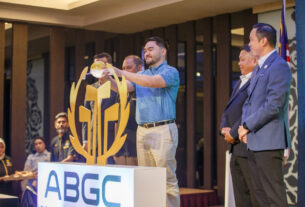
King Norodom Sihamoni officially inaugurated the new “Solidarity Palace” at a ceremony attended by senior Cambodian leaders, including Senate President Hun Sen and Prime Minister Hun Manet.
Described by officials as a building created, constructed and funded by Cambodians, the four-and-a-half-storey complex was initiated by Hun Sen and includes offices, a reception area and a rooftop helipad. Foreign Minister Prak Sokhonn said the facility would primarily be used to receive overseas visitors.
During the ceremony, King Sihamoni praised the building as an important achievement for the country.
The government has not publicly disclosed the total cost of the project. However, a sign displayed inside the building names 11 donors, with businessman and senator Ly Yong Phat listed first.
Donor raises international scrutiny
Ly Yong Phat, who attended the inauguration, was sanctioned by US authorities in 2024. The United States accused his company of involvement in serious human rights abuses connected to people allegedly trafficked into online scam operations.
Ly has rejected allegations connecting him to cybercrime and money-laundering networks, describing the claims as false and damaging to his reputation.
His appearance at the inauguration has nevertheless placed renewed attention on the wider issue of how Cambodia’s business and political landscape intersects with concerns surrounding the country’s scam-centre economy.
Cambodia has increasingly been identified as an important base for transnational online fraud operations. These networks have been accused of using both willing participants and trafficking victims to target people around the world through schemes involving fake relationships, fraudulent investment opportunities and cryptocurrency.
The financial impact of these operations is enormous, with billions of dollars reportedly extracted from victims each year.
Cambodian authorities have repeatedly said they are taking action against the criminal networks behind such operations.
Another donor linked to controversy
Another businessman named among the donors is Hun To, a cousin of Prime Minister Hun Manet.
Hun To previously said he held a 30 percent stake in Huione Pay, a digital payments platform that was later shut down, but insisted that he was not involved in managing its operations.
He also said he had never received profits, dividends or assets from the company.
The US government previously accused Huione Group, which owned the payment platform along with other businesses, of helping launder money for transnational criminal organizations involved in internet scams across Southeast Asia.
The controversy surrounding the platform has attracted international attention because of concerns about how financial systems can be exploited to move money generated through online fraud.
Cambodian authorities have since revoked the business licences of the Huione platforms.
A ceremony overshadowed by bigger questions
The inauguration of the Solidarity Palace was intended to symbolize national development, cooperation and Cambodia’s growing institutional capacity.
But the story does not end with the ribbon-cutting ceremony.
For many observers, the presence of donors facing international scrutiny raises broader questions about transparency, accountability and the relationship between political influence, private wealth and major public projects.
The issue is particularly sensitive at a time when Southeast Asia is confronting a rapidly expanding online scam economy. Across the region, criminal networks have become increasingly sophisticated, while reports of human trafficking, forced labour and financial exploitation have added a human cost to the billions generated by fraudulent schemes.
The challenge for Cambodia, therefore, extends beyond shutting down individual scam compounds or revoking financial licences. It also involves strengthening transparency, protecting trafficking victims, improving financial oversight and ensuring that legitimate economic development is not overshadowed by allegations surrounding powerful individuals and businesses.
The inauguration of a major government facility may represent progress in infrastructure. Yet public confidence depends on more than impressive buildings.
It depends on trust.
And trust becomes particularly important when the people financing major national projects are themselves facing allegations or international sanctions.