

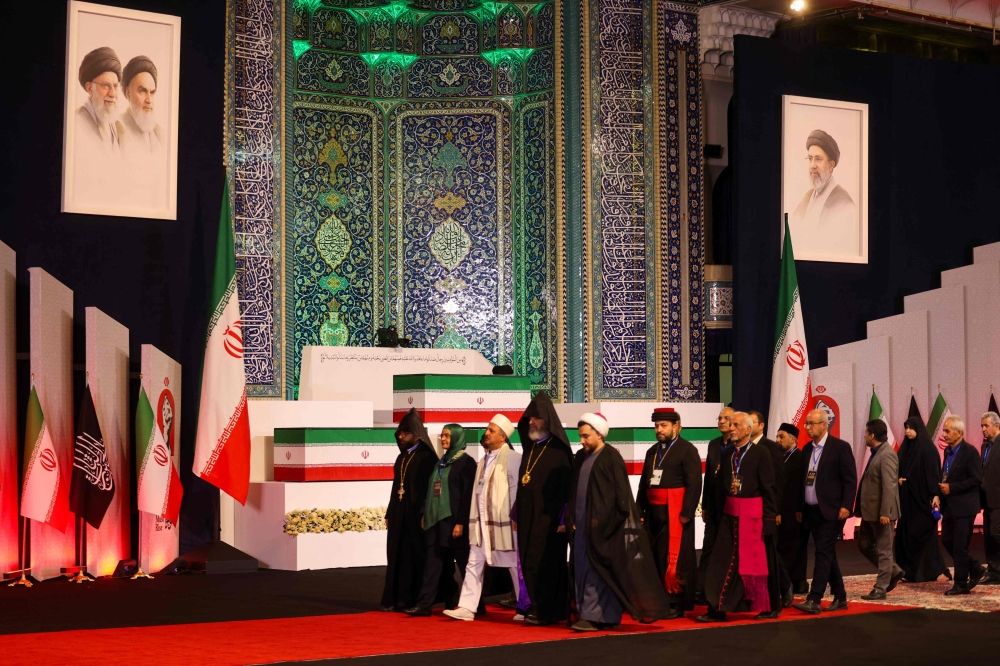
Iran is making final preparations for one of the largest state funerals in its modern history as millions of people are expected to gather in Tehran to pay their final respects to the late Supreme Leader Ayatollah Ali Khamenei. The capital has entered an extraordinary period of mourning, with major public spaces transformed for the historic ceremony and delegations from around 30 countries expected to attend.
Authorities have been working around the clock to prepare Tehran’s Grand Mosalla, where Khamenei will lie in state before the official funeral ceremony. Workers have been decorating the vast religious complex with flowers, banners, and tributes while security forces maintain strict control over the surrounding areas.
One worker involved in the preparations described the atmosphere as emotional, saying people from every corner of Iran are expected to travel to the capital to honor the country’s longtime leader. Officials anticipate enormous crowds, making the ceremony one of the most significant public gatherings in Iran’s history.
Pakistan has confirmed that Prime Minister Shehbaz Sharif will attend the funeral in Tehran. The country has played an important diplomatic role in recent discussions involving the United States and Iran aimed at reducing tensions in the Middle East. Representatives from China, Afghanistan, and several neighboring countries in the Caucasus region are also expected to participate in the official ceremonies.
Iranian Parliament Speaker Mohammad Bagher Ghalibaf has urged citizens to attend the funeral in large numbers, describing the event as a defining moment for the nation. He said a massive public turnout would demonstrate national unity following Khamenei’s death during the opening day of the recent conflict involving the United States and Israel.
The funeral comes shortly after Iran and the United States agreed to a fragile ceasefire following preliminary negotiations intended to end the recent hostilities. The timing places the ceremony at the center of a delicate regional political landscape.
Ayatollah Ali Khamenei, who died at the age of 86, was regarded as both Iran’s political leader and a deeply respected spiritual figure for millions of Shia Muslims around the world. He was reportedly killed during strikes targeting his compound in central Tehran.
His body will remain at the Grand Mosalla for three days, allowing mourners to pay their respects. The remains of several family members who were also killed will be honored during the ceremonies.
Iranian officials estimate that between 15 and 20 million people could participate in the funeral events, potentially making it the largest state funeral ever held in the country.
To accommodate the expected crowds, Tehran has announced temporary public holidays, with government offices and many private businesses closing from Saturday through Monday. Significant traffic restrictions have also been introduced, limiting vehicle access across much of the city center. Authorities have additionally announced partial and full airspace closures over Tehran during different stages of the ceremonies.
Following the events in the capital, Khamenei’s body is expected to be taken to the Iraqi holy cities of Najaf and Karbala before the final burial ceremony on July 9 at the shrine of Imam Reza in Mashhad, the city where he was born.
Meanwhile, uncertainty remains over whether Iran’s new Supreme Leader, Mojtaba Khamenei, will appear publicly during the main funeral proceedings. Since assuming the country’s highest leadership position, he has remained largely out of public view.
With international delegations arriving from across the region and millions of mourners preparing to gather, Iran is set to witness a historic farewell that will not only honor a longtime leader but also signal the beginning of a new chapter in the nation’s political and religious history.