
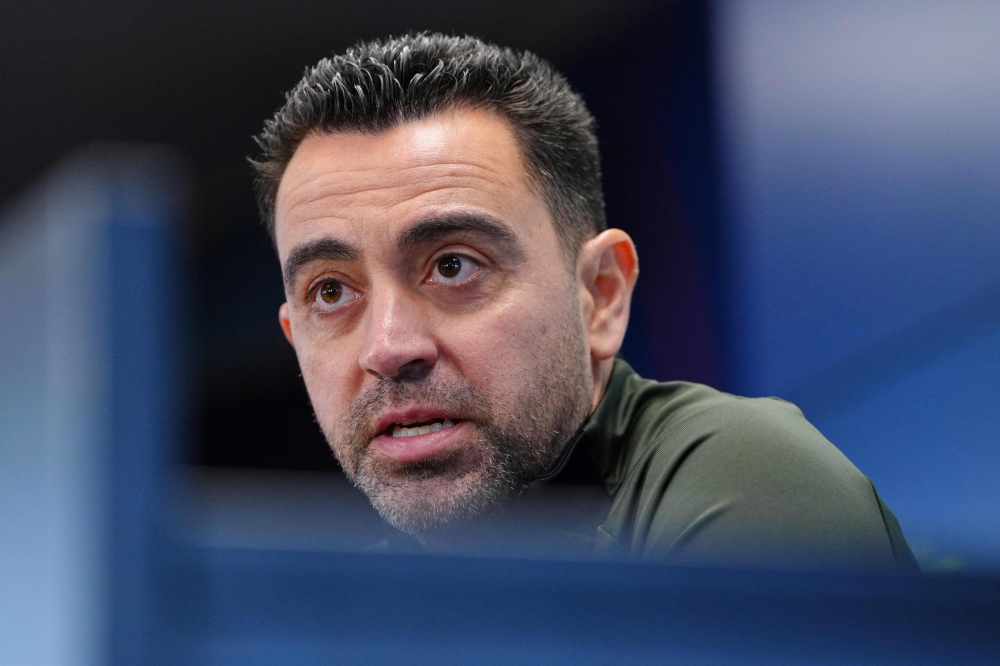
Xavi Hernandez is set to begin a new chapter in his coaching career after being appointed head coach of the Netherlands national team, ending the country’s 48-year wait for a foreign manager.
The 46-year-old former Barcelona midfielder has signed a four-year contract and will guide the Oranje through their Euro 2028 and 2030 World Cup campaigns. His appointment follows Ronald Koeman’s departure after his second spell in charge came to an end following a last-32 penalty defeat to Morocco.
For Xavi, the move carries a special meaning. Although he is Spanish by nationality, his football philosophy has been heavily influenced by the Dutch school of football, particularly the ideas associated with Johan Cruyff and Rinus Michels.
“As someone who received his training at the Barcelona academy, with strong influences from Johan Cruyff and Rinus Michels, among others, I feel a special connection to Dutch football,” Xavi said.
“You could say that I am a bit of a son of Dutch football.”
Xavi also highlighted the influence of coaches such as Louis van Gaal and Frank Rijkaard, both of whom played important roles in his development during his playing and coaching career.
His appointment marks a historic moment for the Netherlands. Xavi becomes the country’s first foreign head coach since Austrian Ernst Happel, who guided the Dutch side to the 1978 World Cup final before they were defeated by Argentina.
The decision also reflects the Dutch federation’s desire to return to a style of football built around possession, creativity, attacking intent and control.
“The Netherlands has a rich football culture and a clear vision that also appeals to me enormously — attacking football, based on possession, with creativity, passion, and conviction,” Xavi said.
“Of course, the most important goal is and always will be to win, but I prefer to do so in a way that reflects those characteristics and that people can enjoy.”
Xavi’s first challenge will come quickly. His debut is scheduled to be a Nations League clash against Germany at the Johan Cruyff Arena in Amsterdam on September 24.
The appointment comes at an important time for the Netherlands, a nation with an extraordinary football history but one still searching for another major international trophy.
The Dutch have reached three World Cup finals but lost each time, giving them the unwanted record of being the nation with the most World Cup final appearances without winning the tournament.
Their only major international trophy remains the 1988 European Championship.
The Netherlands have also experienced several frustrating exits in the European Championship, including a semi-final defeat to England two years ago.
Xavi understands that pressure. As a player, he was part of a Spain generation that transformed the country’s international fortunes. He played a central role in a team that won Euro 2008, the 2010 World Cup and Euro 2012, creating one of the most successful international eras in modern football.
Now, he has the opportunity to attempt something similar from the touchline.
A decorated career both on and off the pitch
Xavi’s reputation was built during an extraordinary playing career with Barcelona and Spain.
He won four Champions League titles with Barcelona and helped establish the possession-based football that became synonymous with the club during its most successful era.
He is also second on Barcelona’s all-time appearance list, behind only Lionel Messi.
After retiring as a player, Xavi moved into management with Qatari club Al-Sadd before returning to Barcelona as head coach.
He guided Barcelona to the 2023 La Liga title but was dismissed at the end of the following season, with Hansi Flick eventually taking over.
Despite his departure from Barcelona, Xavi’s coaching philosophy remains closely connected to the possession-heavy football that shaped his playing career.
Netherlands football director Nigel de Jong believes that background makes Xavi a strong fit for the national team.
“As a player alone, Xavi has experienced and won everything, with a World Cup, multiple national titles, and Champions League titles to his name,” de Jong said.
He added that Xavi’s experience working with elite coaches and his football philosophy align closely with the Dutch federation’s ambitions.
For the Netherlands, the appointment represents more than simply replacing Koeman. It is an attempt to combine the country’s traditional football identity with the demands of modern international football.
For Xavi, it is a chance to prove himself on one of the biggest coaching stages in the world.
The challenge is significant. The Netherlands have the talent, history and football culture to compete with the strongest nations, but converting that potential into international success has remained a persistent problem.
Xavi now has four years to build his team, establish his philosophy and turn a talented generation into genuine contenders.
His first test against Germany will offer an early glimpse of what the new era could look like.
If Xavi can successfully combine the creativity and possession principles he learned through the Barcelona and Dutch football traditions with the competitiveness required at international level, the Netherlands could enter a new and exciting chapter.
The expectations will be high. The history is demanding. But for Xavi and the Netherlands, the opportunity is equally enormous.
The man who helped Spain conquer international football as a player now has the chance to try to reshape the Netherlands from the touchline.