

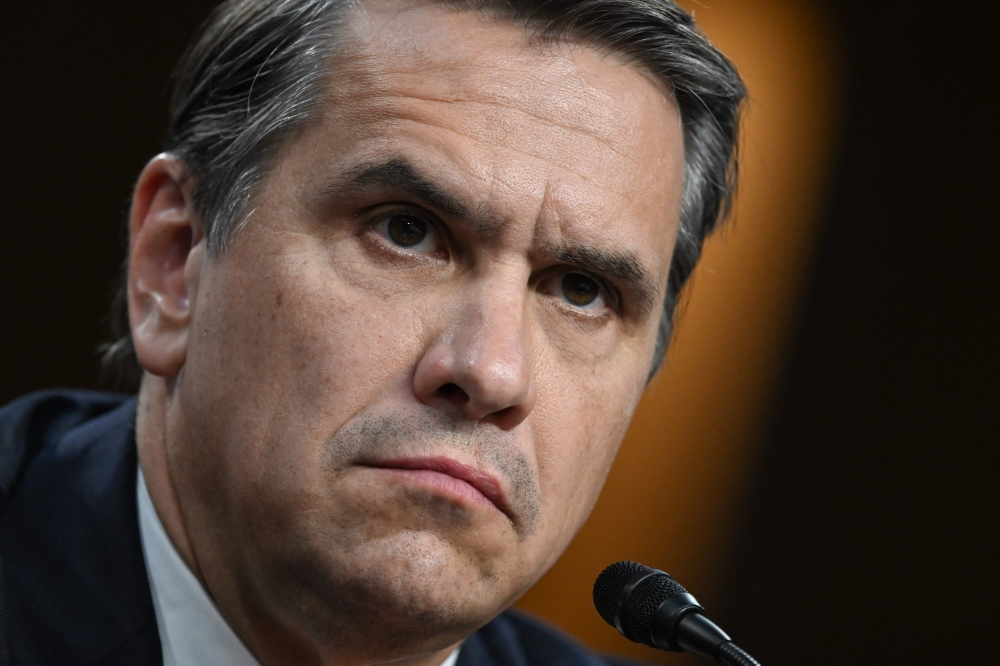
Washington — US President Donald Trump’s former personal lawyer, Todd Blanche, has been confirmed as the new US attorney general, placing a familiar face from Trump’s legal team at the helm of the country’s Justice Department.
The Senate confirmed Blanche on Saturday by a narrow vote of 50 to 49. The decision came despite strong opposition from Democrats, who raised concerns about the growing politicisation of the Justice Department and questioned whether Blanche could maintain the independence expected from the nation’s top law enforcement official.
Blanche had already been serving as acting attorney general after Trump dismissed Pam Bondi in April. His confirmation now formally gives him the position and puts him in charge of the federal department responsible for enforcing US laws and overseeing major criminal investigations and prosecutions.
Before entering government, Blanche was known primarily as one of Trump’s most prominent private lawyers. He represented Trump in several criminal cases, including the New York case involving alleged “hush money” payments to adult-film actor Stormy Daniels. Blanche also served on Trump’s legal defense teams in federal cases involving classified documents and allegations that Trump sought to overturn the results of the 2020 presidential election.
Trump has strongly backed Blanche, describing him as a “star” and placing significant trust in someone who has spent years defending him in court.
For Democrats, however, Blanche’s professional history is precisely what makes his appointment controversial.
Senator Dick Durbin, the ranking Democrat on the Senate Judiciary Committee, argued that the attorney general should serve the American people rather than one political leader. Democrats have repeatedly accused the Trump administration of using the Justice Department to pursue political opponents and protect allies.
“The attorney general is supposed to be the people’s lawyer,” Durbin said during the confirmation debate.
The confirmation was not guaranteed. Republicans hold only a narrow majority in the Senate, meaning even a small number of Republican defections could have prevented Blanche from securing the votes needed for approval.
Behind the scenes, disagreements within the Republican Party focused partly on proposals connected to Trump’s claims that his political allies had been unfairly targeted by federal investigations and prosecutions.
One controversial proposal involved establishing a US$1.8 billion fund for people Trump describes as victims of politically motivated prosecutions. Critics argued that such a fund could potentially benefit individuals connected to the January 6, 2021 attack on the US Capitol, when supporters of Trump attempted to prevent the certification of Joe Biden’s 2020 election victory.
Another contentious issue involved a proposal related to immunity from certain tax audits for Trump, his two eldest sons and the Trump Organization.
Blanche eventually helped calm opposition within his own party by issuing a written order that scrapped the proposed political “anti-weaponization fund.” He also clarified that the tax audit arrangement would apply retroactively to previous tax years rather than providing protection for future tax filings.
The developments come at a particularly consequential moment for the Justice Department.
Since taking office, Trump has pushed for greater presidential control over federal agencies that have traditionally operated with significant independence. His critics argue that this approach risks weakening institutional safeguards and turning law enforcement into a political instrument.
Blanche’s appointment therefore carries significance beyond his personal relationship with Trump. His decisions as attorney general could influence how the Justice Department approaches investigations, prosecutions, federal law enforcement priorities and cases involving people who have clashed with the president.
His tenure has already attracted criticism over the handling of investigative files connected to Jeffrey Epstein, the convicted sex offender who had previously been acquainted with Trump. Victims of Epstein have questioned aspects of the government’s approach to releasing investigative materials.
At the same time, Blanche enters the job with an unusually close understanding of Trump’s legal strategy. He was not simply an attorney working on one isolated case; he was involved in several of the most consequential legal battles surrounding the president.
Trump’s federal cases concerning classified documents and the 2020 election were both dropped after Trump won the 2024 presidential election. Blanche’s transition from defending Trump in court to leading the department responsible for federal law enforcement has consequently drawn intense scrutiny.
For supporters, Blanche represents loyalty, legal experience and confidence in an administration seeking to reshape Washington.
For critics, his confirmation raises a more fundamental question: can someone who previously served as the president’s personal attorney now independently lead the institution responsible for enforcing federal law?
That question is likely to follow Blanche throughout his tenure.
His confirmation marks another major step in Trump’s effort to reshape the Justice Department, but it also places Blanche under an extraordinary level of public scrutiny. As attorney general, his actions will be judged not only by the president who appointed him, but by Congress, the courts, federal employees and the American public.
The challenge now is no longer whether Todd Blanche can defend Donald Trump in court. It is whether, as America’s attorney general, he can demonstrate that the Justice Department serves the law and the public interest above any individual political figure.


