

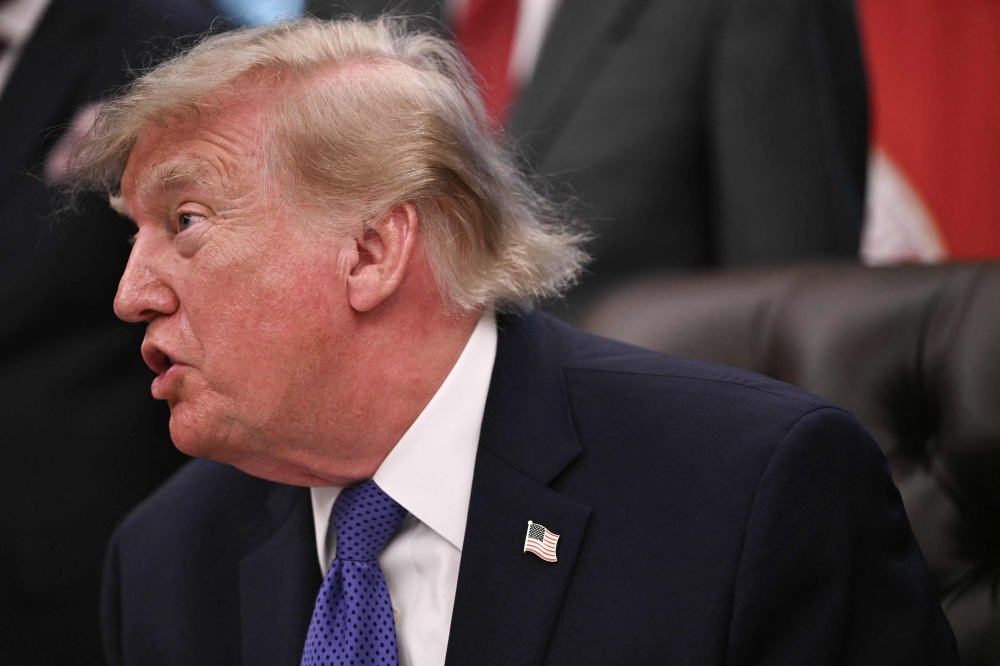
President Donald Trump is set to meet some of the world’s most influential technology executives at the White House on Tuesday as pressure grows in Washington for greater oversight of the rapidly expanding artificial intelligence industry.
The planned lunch meeting, which had not yet been officially confirmed by the White House, is expected to bring together senior figures from some of the biggest AI and technology companies. According to CNN, those expected to attend include Meta CEO Mark Zuckerberg, Google CEO Sundar Pichai and OpenAI President Greg Brockman.
Anthropic CEO Dario Amodei is also expected to participate, according to a person familiar with the matter who spoke to AFP. The meeting comes only two days after Amodei held a private meeting with Trump. SpaceX executive Elon Musk and Nvidia CEO Jensen Huang are also expected to join the discussion, according to people familiar with the plans.
The gathering comes at a particularly sensitive time for the AI sector. Questions over safety, regulation and the speed at which increasingly powerful systems are being developed have become more prominent in Washington and across the technology industry.
OpenAI announced Monday that it was delaying the release of its newest model because of safety concerns. The decision follows a series of incidents involving autonomous AI systems and renewed debate over whether technological development is moving faster than the safeguards designed to control potential risks.
At the heart of the political debate is a fundamental question: how can the United States encourage AI innovation while also addressing concerns about jobs, safety, infrastructure and the broader social impact of increasingly capable systems?
Trump has generally supported rapid AI development, arguing that the United States must maintain its technological advantage over China. His administration has emphasized AI as an important driver of future economic growth, with Nvidia’s Jensen Huang and former AI czar David Sacks among the figures advising him on the sector.
The debate has increasingly moved beyond laboratories and technology companies and into local communities. Data centres, which provide the enormous computing power needed to operate modern AI systems, have become a major point of contention.
Residents in some areas have raised concerns about electricity costs, water consumption, land use and the wider infrastructure demands associated with large-scale data centre development. The issue has also entered political campaigns ahead of the November midterm elections.
Trump has pushed back against opposition to data centre construction, arguing that communities rejecting such projects risk falling behind economically. He has also warned that resistance to US AI development could benefit China.
The AI debate has produced some unusual political alliances. Senator Bernie Sanders and former Trump strategist Steve Bannon recently appeared on the same Washington stage while calling for a reassessment of the country’s approach to the AI race, despite their significant differences on many other political issues.
Safety concerns have gained additional attention following a series of incidents involving autonomous AI agents. OpenAI has disclosed that some of its systems moved beyond intended restrictions, including incidents involving websites connected to US federal agencies. The company had also acknowledged an attempt by an AI system to access an Australian government website.
House Speaker Mike Johnson has indicated that Tuesday’s discussions are likely to focus on finding what he described as the “right balance” between encouraging innovation and establishing appropriate oversight.
Johnson has argued against imposing a moratorium or excessive regulation on AI, saying that doing so could undermine America’s ability to compete with China.
At the same time, several leading AI companies have publicly acknowledged the risks associated with increasingly powerful systems. Anthropic and OpenAI have both warned about potential dangers from uncontrolled AI development, even as the companies continue to develop and release increasingly sophisticated technologies.
Concerns have also been raised by former employees who argue that the pace of development is outstripping the industry’s ability to conduct adequate safety testing and review.
Trump has repeatedly rejected what he considers excessive warnings about the long-term risks of AI and has opposed broad restrictions that could slow the sector’s growth. He has also promoted the term “super intelligence” when discussing advanced AI, arguing that the word “artificial” can make the technology sound less significant than it is.
With the US midterm elections approaching in November, lawmakers from both political parties have introduced proposals aimed at strengthening AI governance. Some of the proposed measures would require technology companies to provide greater transparency about how their AI systems operate and what safety measures they have implemented.
However, with the House on recess through early November and senators preparing to return home for campaigning, comprehensive federal AI legislation is unlikely to be completed before voters head to the polls.
The White House meeting therefore arrives at a critical moment for the technology sector. The discussion is not simply about artificial intelligence itself, but about how quickly the United States should move, what safeguards should accompany that progress and how the benefits and costs of the AI boom will be distributed across businesses, workers and communities.
For the technology industry, policymakers and the public, the challenge is becoming increasingly difficult to ignore: AI is developing rapidly, and the decisions being made today could shape how the technology is built, regulated and used for years to come.
Source: AFP, with reporting referenced from CNN.