
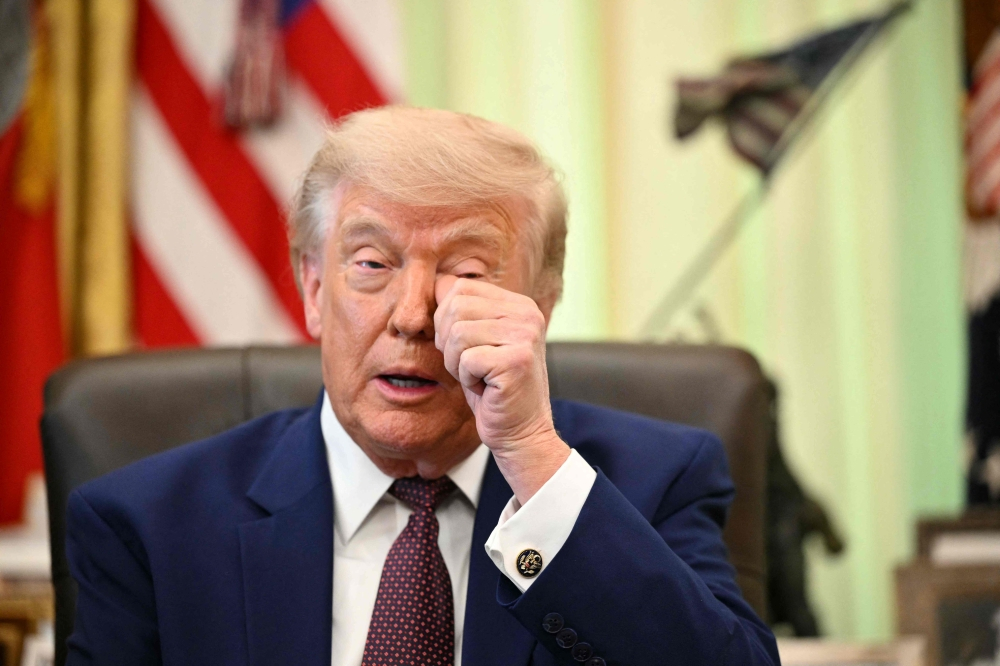
As the United States moves closer to the upcoming midterm elections, President Donald Trump is encountering something that has been relatively rare throughout his political career: increasing resistance from members of his own Republican Party.
For years, Trump maintained a strong grip over Republican lawmakers, often securing support for his policies and political agenda with little public opposition. However, recent developments suggest that some cracks are beginning to appear within the party as concerns grow over electoral risks and voter sentiment.
Several recent issues have highlighted this emerging divide. Republican lawmakers have shown unease over ongoing U.S. military involvement in Iran, questioned the administration’s proposed US$1.8 billion anti-weaponization fund, and raised concerns about funding plans for an expensive White House ballroom project.
These disagreements come at a sensitive moment for Republicans. With midterm elections approaching, many party members are worried about public dissatisfaction over economic challenges, rising living costs, and Trump’s declining approval ratings more than 500 days into his second term.
Political analyst Larry Sabato of the University of Virginia noted that many Republican lawmakers are paying close attention to polling data and voter attitudes.
According to Sabato, some Republicans increasingly view Trump as a potential obstacle to their own re-election efforts rather than a political advantage.
Meanwhile, Trump appears focused on several high-profile projects and events that critics argue may not align with the concerns of everyday Americans. Among them is his proposal to host an Ultimate Fighting Championship event at the White House, a plan that has generated both attention and criticism.
Republicans Push Back on Iran Policy
One of the strongest signs of Republican dissent emerged when the House of Representatives approved a resolution aimed at limiting continued U.S. military action involving Iran.
The vote saw several Republican lawmakers break ranks and support the measure alongside Democrats.
Trump responded sharply, criticizing the move on social media and accusing the lawmakers involved of seeking publicity rather than supporting national interests.
Despite this disagreement, Trump’s influence over the Republican Party remains significant. Since returning to office in January 2025, he has continued to shape party priorities and maintain strong support among many members of the Make America Great movement.
However, recent controversies have created growing discomfort among some Republicans, particularly as economic concerns become a major issue for voters heading into the election season.
Controversial Spending Plans Draw Criticism
Another source of tension involves the administration’s proposed anti-weaponization fund, which supporters argue would assist individuals who believe they were unfairly targeted by government agencies.
Critics, including some Republicans, have labeled the proposal unnecessary and controversial.
Although the administration indicated earlier that the plan would be withdrawn following a judicial ruling, Trump later suggested he remained interested in pursuing it.
A separate proposal seeking approximately US$1 billion in funding for security related to a new White House ballroom project was ultimately removed before lawmakers could vote on it, reflecting the growing sensitivity around government spending.
Personnel Decisions Spark New Debate
Trump’s recent staffing decisions have also generated debate within Republican circles.
His appointment of housing official Bill Pulte as acting national intelligence chief has raised concerns among some lawmakers, particularly regarding the future of key surveillance programs.
At the same time, efforts to elevate former personal attorney Todd Blanche to the role of U.S. attorney general could face challenges during the confirmation process.
These developments suggest that while Trump continues to command substantial loyalty within the party, there is increasing willingness among some Republicans to publicly question certain decisions.
A Party at a Crossroads
Despite visible disagreements, Trump remains a dominant force in Republican politics. His endorsements continue to carry weight, and he has successfully supported candidates aligned with his political movement in numerous primary contests.
Yet political observers note that years of intense loyalty demands may now be creating unintended consequences.
Lawmakers who previously faced criticism, political pressure, or primary challenges from Trump may be less inclined to support him unconditionally when crucial legislative votes arise.
With Congress narrowly divided and every vote carrying greater significance, even a small number of Republican defections could have a major impact on the administration’s ability to advance its agenda.