
Every parent wants to see their child do well.
When a child shows an early talent for academics, creativity, music, sport or another area, it is natural for parents to imagine a bright future filled with opportunities. They may wonder how far that talent could take their child and what they can do to help them reach their full potential.
But there is an important truth that can sometimes get lost in all those expectations: being naturally gifted does not automatically guarantee future success.
A child may be exceptionally good at something when they are young and still choose a completely different path later in life. Another child may appear average at first but gradually develop remarkable abilities through curiosity, persistence and practice.
For parents, the goal should therefore not be to constantly push a gifted child toward bigger achievements. Instead, it should be about creating an environment where children feel safe to explore, make mistakes, face challenges and discover who they really want to become.
Clinical psychologist Dr Emma Svanberg, author of Parenting For Humans, explains that labels such as “gifted” and “talented” are often used by schools to describe children who are ahead of their peers in a particular area. But such labels only tell part of a child’s story.
A child might be academically advanced, for example, but that does not necessarily tell us how they respond when something becomes difficult.
Svanberg highlights qualities such as persistence, tolerance of frustration and the ability to maintain interest when challenges arise. These qualities can become just as important as natural ability when children grow older.
Dr David Brydan, a senior lecturer at King’s College London and author of Smart: A History Of Intelligence, also cautions against creating a strict divide between “bright” children and everyone else.
The idea of intelligence being something that neatly separates children has a complicated historical background. In everyday life, when adults call a child “bright” or “gifted”, they are often talking about abilities that happen to be highly valued by the education system.
That ability is certainly something worth celebrating. But it should not become a box that determines what a child is expected to become.
So what can parents actually do?
Make learning something children want to continue
One of the biggest gifts parents can give their children is a lasting love of learning.
Interestingly, some highly capable children can lose that enthusiasm because schoolwork comes too easily to them. When children rarely experience difficulty, learning can eventually become repetitive and boring.
“When things are too easy, they become dull,” Svanberg explains. Children need to feel that what they are doing has meaning and purpose.
The challenge can become particularly noticeable later in school, when subjects become harder and children are suddenly expected to put in considerable effort.
A child who has always succeeded effortlessly may find the experience uncomfortable. They may begin to interpret difficulty as a sign that they are no longer capable.
That can create a dangerous cycle: if something feels difficult, they avoid it. By avoiding it, they never develop the skills needed to overcome challenges. And without those skills, difficult tasks become even more intimidating.
Parents can help break this cycle by changing the way they praise children.
Instead of constantly saying, “You are so clever” or focusing only on high grades, parents can recognise persistence.
They might say:
“I noticed how long you kept working on that.”
“You didn’t give up when it became difficult.”
“You found another way to solve the problem.”
These small comments can teach children something powerful: effort is not evidence of weakness. Effort is part of growth.
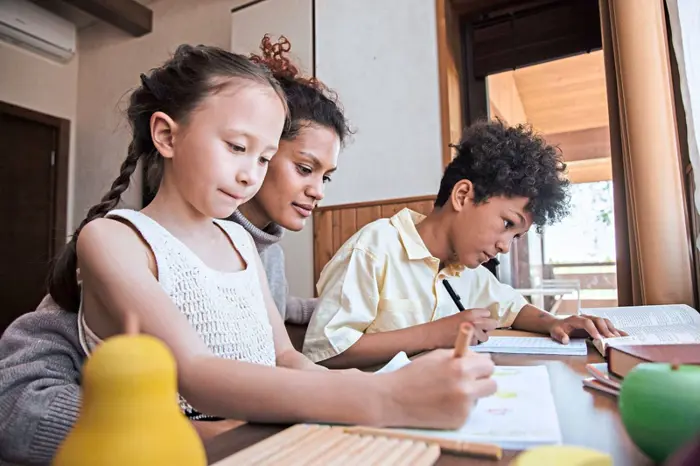
Help children build healthy study habits
Good study habits may not matter much during the early years of childhood, but they become increasingly important as children grow and academic demands increase.
Being naturally intelligent does not mean a child will automatically know how to organise their time, concentrate, manage assignments or prepare for difficult exams.
These are skills that need to be developed.
Brydan points out that children can learn these habits at home. Is there a regular time for schoolwork? Can the child work without unnecessary distractions? Is there an adult available when they need help understanding an assignment?
These routines do not mean turning the home into a second classroom or filling every evening with homework.
The goal is simply to help children understand that meaningful work sometimes requires time, concentration and consistency.
Interestingly, Brydan notes that the students who perform best at university are not necessarily those who were considered the most naturally gifted.
Often, they are the students who are genuinely interested in what they are studying and have developed reliable study habits.
That is an important lesson for parents: natural ability may open a door, but habits can determine what happens after the door opens.
Protect and encourage curiosity
Curiosity can be one of the most valuable qualities a child develops.
Children naturally ask questions. Why is the sky blue? How does an aeroplane fly? Why do people behave differently? How does a computer work? What happens beneath the ocean?
Instead of always trying to provide immediate answers, parents can encourage children to investigate those questions themselves.
Brydan says an interest in the world and a desire to understand it can be encouraged at home.
Children do not need to love every subject they study at school. Few adults do.
But finding even a few subjects, activities or ideas that genuinely excite them can make a significant difference.
A curious child does not simply collect answers. They learn how to ask better questions.
And that ability can stay with them long after they leave school.
Let children struggle sometimes
For parents, watching a child struggle can be difficult.
The natural reaction may be to step in, provide the answer or remove the obstacle.
But sometimes the most helpful thing a parent can do is allow a child to experience a manageable level of difficulty.
If a child is naturally talented at mathematics, for example, they might benefit from trying music, art, sport, coding or another activity where they are not immediately successful.
The purpose is not to frustrate them.
It is to help them discover that being a beginner is completely normal.
When children learn that they can struggle without feeling ashamed, they become more comfortable with challenges.
They begin to understand that saying “I don’t know how to do this yet” is very different from saying “I can’t do this.”
That mindset can become enormously valuable throughout life.
Remember that home matters enormously
Parents sometimes worry that their child’s school is not doing enough to nurture their abilities.
Schools obviously play an important role, but children do not learn only inside classrooms.
Their home environment, family relationships, encouragement, routines and opportunities to explore can have a profound influence on development.
Research has repeatedly highlighted the connection between family circumstances and children’s educational outcomes. Brydan stresses that academic performance depends on what happens at home as well as what happens at school.
That does not mean parents need to create a perfect home environment or provide expensive resources.
Sometimes the most meaningful support is much simpler.
It can be listening when a child talks about something they love.
It can be asking questions.
It can be reading together.
It can be giving children space to solve problems independently.
It can be encouraging them after a disappointing result.
And sometimes it can simply be telling them that their worth does not depend on their grades.
Be careful about the pressure of expectations
Perhaps one of the most important changes parents can make is to reconsider what they mean when they say they want their child’s potential to be “maximised.”
The phrase sounds positive, but it can unintentionally turn childhood into a performance project.
Svanberg challenges the idea that potential is a limited resource that must be used before a certain deadline.
Children are not machines waiting to be optimised.
A child who shows extraordinary promise in one area at age eight may have completely different interests at 18.
And that is not necessarily wasted potential.
It may simply mean that the child has grown, changed and discovered something else.
The future may take them somewhere their parents never imagined.
That is part of growing up.
Give children room to become themselves
Parents naturally have hopes for their children.
They may imagine a particular career, achievement or lifestyle. They may see a talent and believe they know where it could lead.
But children are not responsible for completing the dreams their parents once imagined for them.
A truly supportive parent does not simply ask, “How successful can my child become?”
They also ask:
“What makes my child happy?”
“What are they curious about?”
“What challenges are they willing to take on?”
“What kind of person do they want to become?”
Those questions create room for children to develop their own identities.
A child who feels loved only when they achieve may eventually become afraid of failure.
A child who feels supported even when they struggle may become willing to take risks, learn new things and keep going.
That difference can shape far more than academic results.
The real meaning of helping a child reach their potential
Helping children reach their potential is not about squeezing every possible achievement out of them.
It is about giving them the foundations they need to navigate life.
Teach them to work hard without teaching them that their worth depends on results.
Encourage ambition without making them afraid of failure.
Celebrate talent without convincing them that talent alone is enough.
Support their interests without deciding their entire future for them.
And above all, give them enough freedom to discover who they are.
The most successful child may not always be the one who wins every competition, receives the highest grades or fulfils every expectation.
Sometimes success looks much quieter.
It can be a child who keeps trying after getting something wrong.
A teenager who discovers a subject they genuinely love.
A young person who feels confident enough to change direction.
Or an adult who looks back and knows they were allowed to become themselves.
Perhaps the greatest potential a child has is not the talent we can see today, but the person they have the freedom to become tomorrow.
A message for parents
Your child’s future does not need to be perfectly planned.
You do not need to have every answer.
You do not need to turn every talent into an achievement.
Sometimes the strongest support you can offer is simply to be there: encourage their curiosity, notice their effort, let them struggle safely, listen to their dreams and remind them that they are loved beyond their accomplishments.
Because children do not need parents who build their entire future for them.
They need parents who give them the confidence, resilience and freedom to build it themselves.
— Based on reporting by PA Media/dpa