

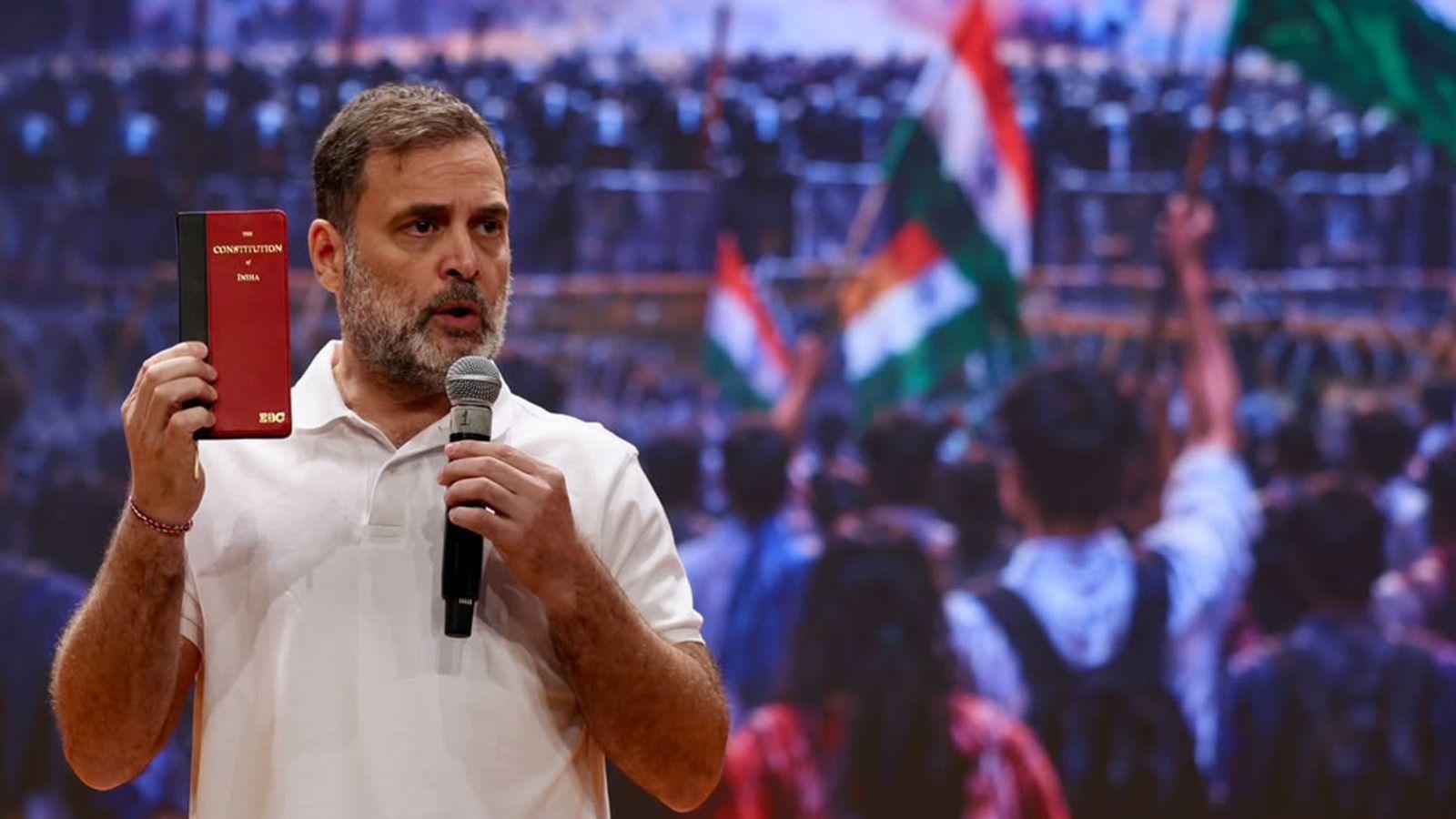
Opposition leader Rahul Gandhi is leading a renewed push to challenge alleged electoral irregularities in India, as INDIA bloc parties march towards the Supreme Court to raise concerns over what they describe as “vote chori”, or vote theft. The political mobilisation comes amid growing tensions surrounding the Election Commission, the revision of electoral rolls and the detention of protesters demanding accountability from Chief Election Commissioner Gyanesh Kumar.
Rahul Gandhi, the Leader of the Opposition in the Lok Sabha, had earlier announced plans to approach the Supreme Court with a petition concerning the allegations. The issue has become a major point of confrontation between opposition parties and the Election Commission, with opposition leaders calling for greater transparency and accountability in the electoral process.
The INDIA bloc’s planned approach to the court follows an earlier request by Rahul Gandhi and Mallikarjun Kharge, the Leader of the Opposition in the Rajya Sabha, to meet Chief Justice of India Surya Kant. The request was reportedly declined amid pending cases concerning the issues raised by the opposition and the judiciary’s responsibility for hearing such matters.
The opposition’s concerns extend beyond allegations of electoral irregularities. Leaders have also raised questions about police action against demonstrators, delays in hearings related to the Special Intensive Revision (SIR) of electoral rolls, and the composition of the committee involved in recommending appointments to the Election Commission.
For the opposition, these issues are closely connected to public confidence in India’s democratic institutions. They argue that voters must be able to trust that electoral procedures are transparent, fair and open to scrutiny.
CJP seeks permission for a peaceful protest
Separately, Cockroach Janta Party (CJP) leaders, including Saurav Das and Ashutosh Ranka, visited Parliament Street Police Station to seek a date for a peaceful demonstration at Jantar Mantar against Chief Election Commissioner Gyanesh Kumar.
The party has reportedly given Delhi Police 24 hours to provide a date for the proposed protest. Its demand comes amid continuing restrictions on demonstrations and a series of detentions involving people seeking to raise concerns about the Election Commission.
The developments have added another dimension to the broader political dispute, with opposition groups attempting to pursue legal action while also seeking opportunities to demonstrate publicly.
Heavy security and mass detentions in Delhi
The political tensions have been accompanied by an extensive security operation in the national capital. According to the report, authorities detained more than 7,000 protesters on Saturday, including CJP leader Abhijeet Dipke and four former chief ministers, as police moved to prevent a planned mass demonstration at Jantar Mantar calling for Kumar’s resignation.
Jantar Mantar, a recognised protest venue, reportedly remained largely deserted during the operation. More than 30,000 security personnel were deployed, and multiple layers of barricades were installed across Lutyens’ Delhi to restrict access to the area.
The security measures continued on Sunday, when more than 200 additional protesters were reportedly detained as they raised slogans and attempted to march towards Jantar Mantar. Several were taken away in police buses, while detentions continued at different locations into the evening, including after 6.30 pm.
The scale of the deployment and the number of reported detentions have intensified scrutiny of how demonstrations are being handled in the capital. The situation has also renewed debate about how authorities can maintain public order while allowing peaceful political expression.
Why the Election Commission is facing criticism
The controversy centres on the Special Intensive Revision of electoral rolls, a process intended to review and update voter lists. Opposition parties have raised concerns about how the exercise is being conducted and whether adequate safeguards are in place to protect eligible voters.
Criticism of the Election Commission has also followed reports that Election Commissioners Sukhbir Singh Sandhu and Vivek Joshi raised objections on at least 14 occasions over a period of 10 months regarding certain decisions and orders. Some of the reported objections concerned decisions allegedly issued without their knowledge.
The Election Commission, however, has maintained that the three-member commission made decisions, including those related to the SIR exercise, unanimously.
These differing accounts have placed the institution under increased public and political scrutiny. The central questions concern the decision-making process, the transparency of electoral administration and the mechanisms available to address allegations of irregularities.
A test for democratic accountability
The latest developments highlight the growing confrontation between India’s opposition parties and the institutions responsible for managing elections. As political leaders seek judicial intervention and supporters take to the streets, the controversy is likely to keep electoral transparency and institutional accountability at the centre of public debate.
The allegations raised by political parties must be examined through evidence, due process and appropriate legal channels. At the same time, public concerns about voting rights deserve clear explanations and credible responses from the institutions entrusted with protecting the electoral process.
Ultimately, democracy depends on more than holding elections. It also depends on whether citizens trust the process, whether concerns can be raised without fear, and whether institutions are willing to address legitimate questions openly. The coming legal and political developments will be important in determining how these concerns are resolved and how public confidence in India’s electoral system can be strengthened.