
UK Prime Minister Andy Burnham used his first major speech at the Labour Party’s annual conference in Liverpool to present a sweeping vision for Britain, promising what he described as a fundamental change in the country’s approach to public services, the economy and politics.
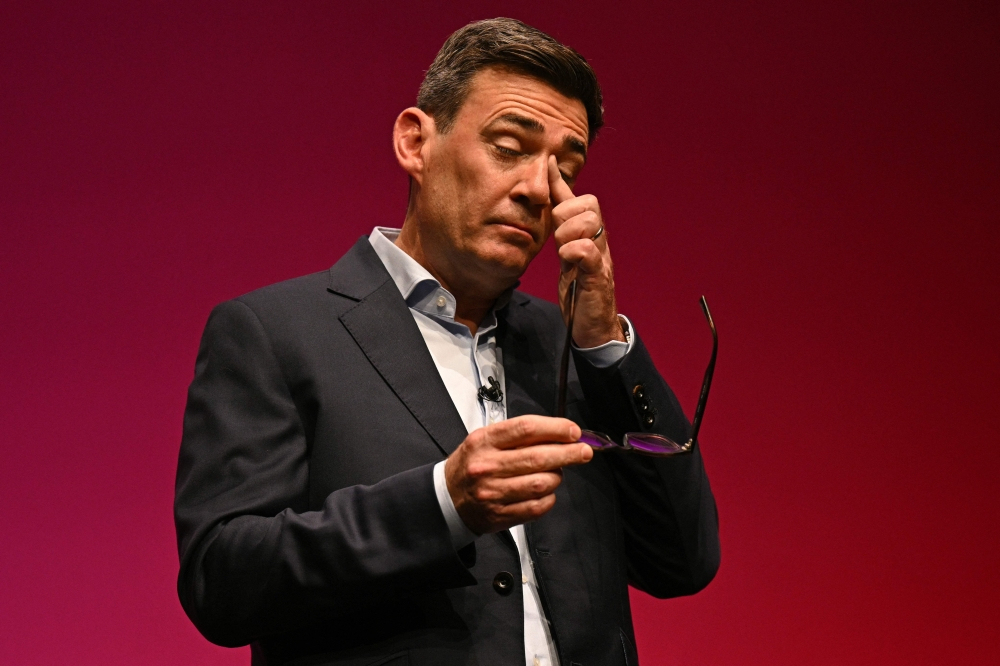
The speech was also deeply personal. Burnham became visibly emotional while speaking about his father, who recently died after living with Alzheimer’s. He said the experience had strengthened his determination to improve the way Britain supports older people, families and care workers.
At the centre of his address was a proposal to create a National Care Service in England, designed around care that would be free at the point of use. Burnham said the system would aim to protect people from having to use their homes and savings to meet care costs and would give greater recognition to the workers providing care. The government intends to begin preparing the foundations for the service before introducing it in the next Parliament.
Burnham acknowledged that the proposal would be expensive and politically difficult. Independent estimates have suggested that a comprehensive NHS-style social care system could require billions of pounds each year, while analysts have questioned whether the proposed funding arrangements would cover the full long-term cost.
One of the most controversial parts of the plan involves the state pension. Burnham said the existing triple lock would remain in place during the current Parliament, but from April 2030 the system would change. Pensions would continue to rise by at least inflation or 2.5 percent, while the government says the reform would generate savings that could help fund the National Care Service.
The proposal has already prompted criticism from opposition politicians and other groups, particularly over the possible impact on pensioners. The debate centres on whether changing the pension formula can provide sustainable funding for social care while protecting the purchasing power of older people.
Burnham also promised a greater public role in essential services. His government plans to introduce legislation aimed at removing restrictions on public ownership of water companies, while giving local leaders stronger powers to hold utilities accountable. He also announced plans for a publicly owned Great British Grid intended to increase competition in energy infrastructure and accelerate electricity connections.
Housing and local government also featured prominently in his vision. Burnham argued that giving local leaders greater control and increasing the supply of council housing could form part of a wider economic strategy, alongside efforts to reduce homelessness and improve opportunities for younger people.
Another major announcement concerned electoral reform. Burnham said he would establish a national commission involving political parties to examine changes to the UK’s electoral system. Labour would then take a commitment on electoral reform into the next general election, according to his speech.
Relations between Britain and the European Union were another important part of the address. Burnham argued that Brexit had not delivered the level of control its supporters had promised and said his government would consider different options for Britain’s future relationship with the EU. He stopped short of announcing a specific plan to reverse Brexit, instead pointing to discussions and efforts to establish a longer-term relationship with the bloc.
The prime minister also placed strong emphasis on younger people. His proposals included changes to education and welfare, expanded technical and employment pathways, work placements and improved access to mental health support for young people. He argued that greater investment in young people could help reduce long-term dependence on welfare while strengthening Britain’s economy.
Beyond domestic policy, Burnham addressed Britain’s international responsibilities, including defence commitments through NATO and continued support for Ukraine. He also spoke about Britain’s role in international discussions on artificial intelligence and said the country should play a leading role in developing global rules around the technology.
The speech comes at a challenging time for the UK, with pressure on public finances, weak economic growth, high household costs and significant demands on government spending. Burnham acknowledged that his proposals would require difficult choices and repeatedly stressed that his government would need to operate within its fiscal rules.
What made the speech stand out, however, was not simply the number of policies announced. It was the personal story running through it. When Burnham spoke about his father and the experience of watching a family member depend on the care system, the discussion about social care became much more than a government policy announcement.
For Burnham, the issue is closely connected to a personal promise he says he made after seeing the difficulties his family experienced. His message was that Britain should build a system in which growing older does not automatically mean families must fear the financial consequences of needing care.
The coming years will determine how much of this ambitious programme can move from conference promises into legislation, funding and practical services. For now, Burnham has placed public services, social care, pensions, utilities, electoral reform and Britain’s relationship with Europe at the centre of his government’s long-term political agenda.