
Israel’s general election has left the country facing political uncertainty, with Prime Minister Benjamin Netanyahu’s bloc taking the lead in the initial vote count but failing to secure the parliamentary majority needed to form a government on its own. With more than half of the ballots counted on Wednesday, the results pointed to a closely contested political battle that could shape Israel’s leadership and future direction.
The election drew the highest voter turnout in decades, reflecting the high stakes surrounding Netanyahu’s leadership. As Israel’s longest-serving prime minister, Netanyahu has played a central role in steering the country towards right-wing politics and overseeing major military operations following Hamas’s October 7, 2023, attack.
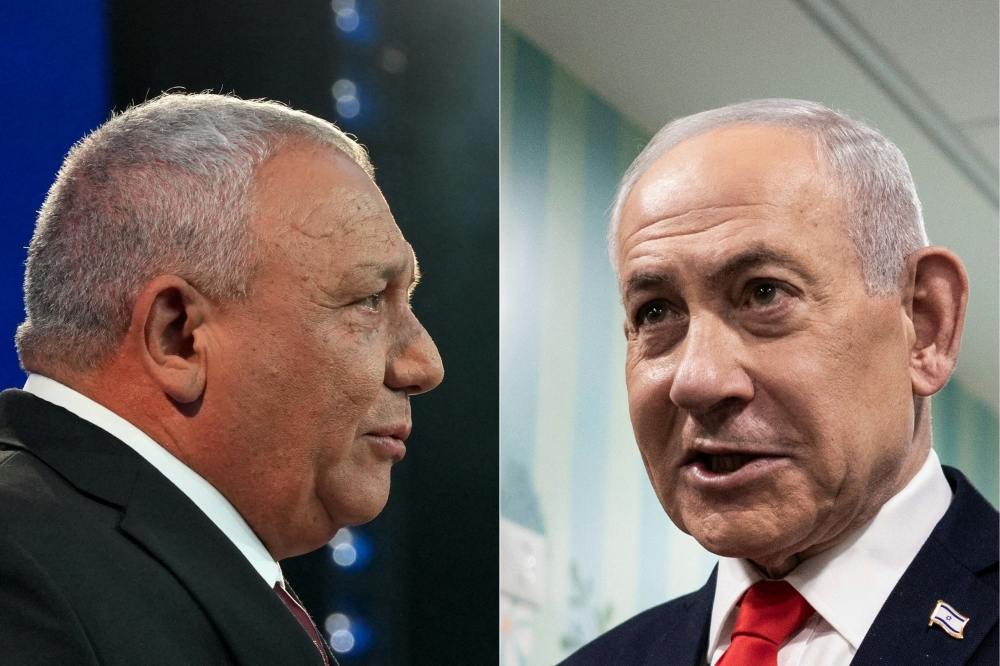
According to the partial results, Netanyahu’s bloc secured 55 seats in the 120-member Knesset after 51.8 per cent of the ballots had been counted. The opposition bloc led by Gadi Eisenkot won 49 seats, while Arab political parties secured 16 seats. These figures could change as counting continues, leaving the final balance of power uncertain.
Earlier exit polls had suggested a tight contest, with both Netanyahu’s right-wing camp and Eisenkot’s opposition bloc projected to win approximately 51 seats. Neither side appeared close to the 61 seats required for an outright parliamentary majority, raising questions about how the next government would be formed.
One of the most notable developments was the strong performance of Arab political parties. Higher voter participation among Arab Israelis contributed to their gains, positioning them as potentially influential players in the negotiations that follow the election. Their performance also highlighted the importance of minority voters in determining the country’s political future.
Arab lawmakers could potentially help the opposition bloc secure a parliamentary majority through a coalition agreement. However, forming such an arrangement may prove difficult. Eisenkot had said during the campaign that he would not form a government with Arab lawmakers, a position that echoes Netanyahu’s objections to a government dependent on Arab political support.
An alternative could involve Arab lawmakers supporting an opposition-led minority government in parliamentary votes without formally joining the governing coalition. Whether such an arrangement would be politically sustainable remains uncertain, particularly given the deep divisions within Israeli politics.
With neither major camp securing a clear majority, negotiations could continue for weeks as political leaders seek agreements with smaller parties. If those efforts fail, Israel could face another election. In the meantime, Netanyahu could remain caretaker prime minister until a new government is established, allowing him to retain his position during the political deadlock.
Speaking to supporters at a convention centre in Jerusalem shortly after 3 a.m. on Wednesday, Netanyahu called for a strong right-wing government and urged what he described as the Jewish and Zionist majority to unite. However, he stopped short of declaring victory in his brief address.
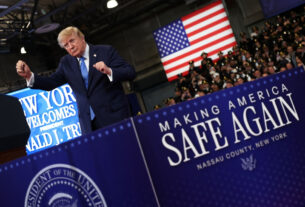
US President Donald Trump also commented on the election, telling reporters that his endorsement had helped Netanyahu significantly. The remark underscored the international attention surrounding the Israeli vote and its potential implications for relations between Israel and its allies.
Meanwhile, Eisenkot addressed supporters in Tel Aviv and challenged Netanyahu over the possibility of using national security concerns to pursue a unity government. He urged the prime minister not to use Israel’s security needs for political purposes and described him as a caretaker leader without a fresh mandate from the public.
At 66, Eisenkot entered the contest as a former military chief seeking to challenge Netanyahu’s political dominance. Although the two leaders share several security positions, Eisenkot has promised a more inclusive political atmosphere within Israel and pledged to take a tougher approach towards violent settlers in the occupied West Bank.
The election took place against a backdrop of growing international criticism of Israel. The country’s military campaign in Gaza, the wider regional conflict involving Iran, expanding settlements and violence against Palestinians in the occupied West Bank have all contributed to heightened diplomatic tensions.
Although Eisenkot has supported Israel’s military offensive in Gaza, which has left much of the territory devastated, his campaign has sought to distinguish itself from Netanyahu’s leadership. His promises of greater domestic inclusion and action against settler violence have become important elements of his appeal to voters seeking a different political direction.
Voter turnout reached nearly 78 per cent, the highest level since 1999, demonstrating the extent of public engagement in the election. Eisenkot argued that the result should be enough to encourage political change and urged leaders to move quickly towards forming a government rather than sending voters back to the polls.
He said the public had voted for change and called on Netanyahu to recognise the loss of confidence in his leadership. His remarks reflected the opposition’s determination to turn its electoral performance into a viable governing arrangement, even as the final outcome remained unclear.
Arab Israelis, also known as Palestinian citizens of Israel, account for approximately 21 per cent of the country’s population. Their increased participation and projected electoral gains could influence negotiations, parliamentary votes and the broader debate over political representation in Israel.
With the final results expected by Thursday evening or Friday morning, attention remains focused on whether Netanyahu can assemble a right-wing coalition or whether the opposition can build an alternative government. The outcome will depend not only on the final seat count but also on the willingness of political parties to negotiate and compromise.
For now, Israel faces a period of uncertainty. The election has revealed a divided electorate, strengthened the position of Arab political parties and left both major political camps searching for a path to power. The coming negotiations will determine whether the country moves towards a new governing arrangement or remains caught in another prolonged political struggle.
Source: AFP