
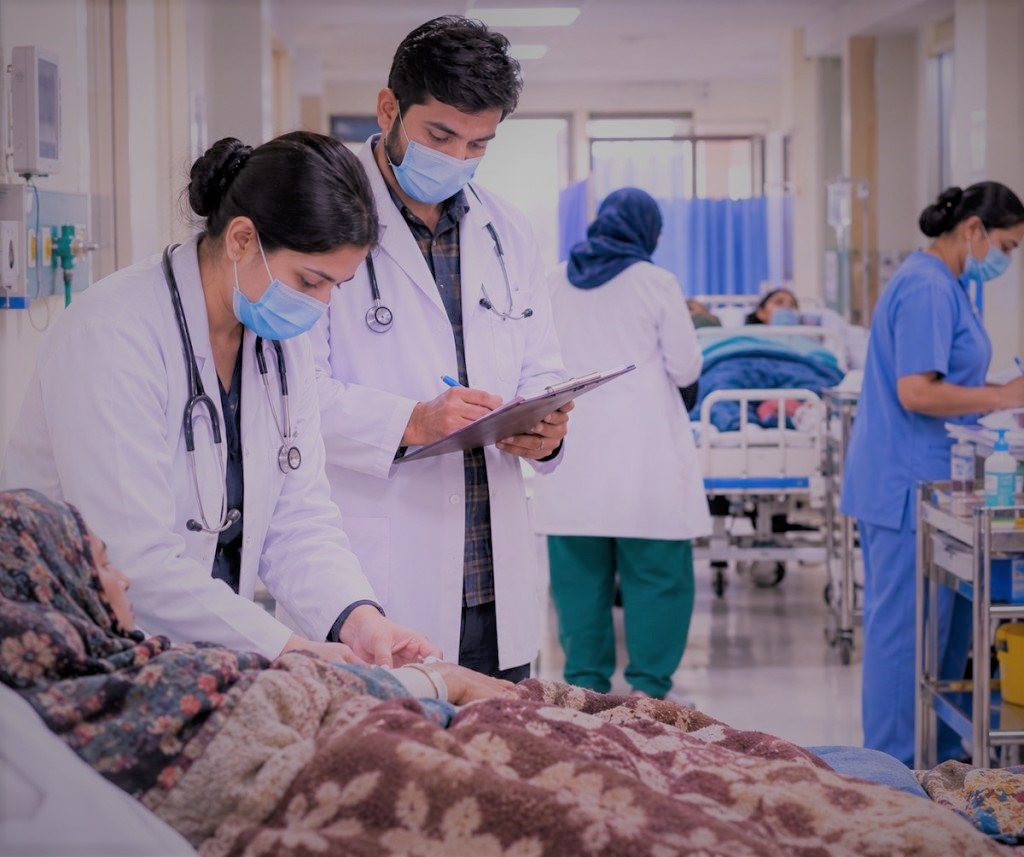
The Jammu and Kashmir government has acknowledged that several healthcare institutions across the Union Territory are facing shortages of medical and paramedical staff, while maintaining that essential healthcare services continue to function smoothly and that patient care has not been adversely affected.
The issue came up during the ongoing autumn session of the Jammu and Kashmir Legislative Assembly after MLA Salman Ali Sagar raised a starred question regarding staffing levels in healthcare institutions. In its written response, the Health and Medical Education Department said that staffing shortages differ from one institution to another, depending on sanctioned positions, operational requirements and the availability of personnel.
The government confirmed that vacancies exist in certain medical and paramedical categories but said the manpower situation is being regularly reviewed. According to the department, this monitoring is aimed at making the best possible use of the available workforce while ensuring that healthcare facilities continue to provide necessary services.
For healthcare institutions in Srinagar, the government said the existing staff shortage had not resulted in any adverse impact on patient services. Where gaps exist, authorities are using temporary or stop-gap arrangements to maintain staffing levels and keep services running.
The government also pointed to the National Health Mission as one of the mechanisms being used to address manpower shortages. Staff are being deployed or engaged under NHM, wherever permissible, to supplement existing teams and help healthcare institutions manage operational requirements.
Sher-i-Kashmir Institute of Medical Sciences, commonly known as SKIMS, was also specifically mentioned in the government’s response. Despite vacancies among doctors, nurses and other allied healthcare personnel, the government said services at the institution were continuing smoothly.
At the same time, the response highlights an issue that remains important for the long-term functioning of public healthcare: having enough trained professionals to meet the demands of patients. Hospitals and medical institutions depend not only on infrastructure and equipment but also on doctors, nurses, technicians and other healthcare workers who keep services operating every day.
The government said vacant positions across different medical and paramedical categories are proposed to be filled on priority. However, the recruitment process will depend on the availability of selection panels and recommendations from the competent recruiting agencies.
For patients and healthcare workers, staffing numbers can have a direct bearing on workloads, waiting times and the ability of institutions to respond to growing demand. While the government says current arrangements are helping prevent disruption, filling permanent vacancies remains an important part of strengthening the healthcare system.
The latest response therefore presents two sides of the situation: staffing shortages are officially acknowledged, while the government maintains that healthcare delivery has so far remained stable. How quickly vacant positions are ultimately filled will determine how these temporary arrangements translate into longer-term staffing stability across Jammu and Kashmir’s healthcare institutions.
For the people relying on public hospitals, the issue is about more than numbers on a staffing chart. It is about having a doctor available when needed, a nurse when care is required and a healthcare team with enough support to serve patients effectively. The government’s assurance that services remain smooth may provide some reassurance, but the continued focus on recruitment will remain important for building a stronger and more resilient public healthcare system.