
The Strait of Hormuz has once again become the center of intense diplomatic attention as Iran and Oman work toward a possible temporary shipping corridor through the strategically vital waterway.
The discussions come at a critical moment for global energy markets. The strait, bordered by Iran and Oman, is one of the world’s most important maritime routes for oil and gas shipments. Any prolonged disruption can quickly create uncertainty for energy markets, shipping companies, businesses and consumers far beyond the Middle East.
Iran and Oman have not yet finalized the conditions required to reopen the waterway, but negotiations are continuing. Among the proposals being discussed are a temporary route for commercial vessels and efforts to clear mines that could threaten safe navigation.
Why does Oman have such an important role?
Oman’s geographic position makes it a natural participant in discussions surrounding the Strait of Hormuz.
Both Iran and Oman border the narrow waterway, giving Muscat a direct interest in restoring safe maritime movement while also placing it in a delicate diplomatic position between Tehran and Washington.
A memorandum of understanding between the United States and Iran in June had provided for the reopening of the Strait of Hormuz. It also left Iran and Oman to work out arrangements concerning the future administration of the waterway and maritime services, with Gulf states expected to participate and international law serving as a framework.
However, that broader agreement has since unraveled, leaving the future of the strait uncertain.
Now, Oman appears to be trying to keep the focus on one immediate objective: getting ships moving safely again.
A temporary corridor is on the table
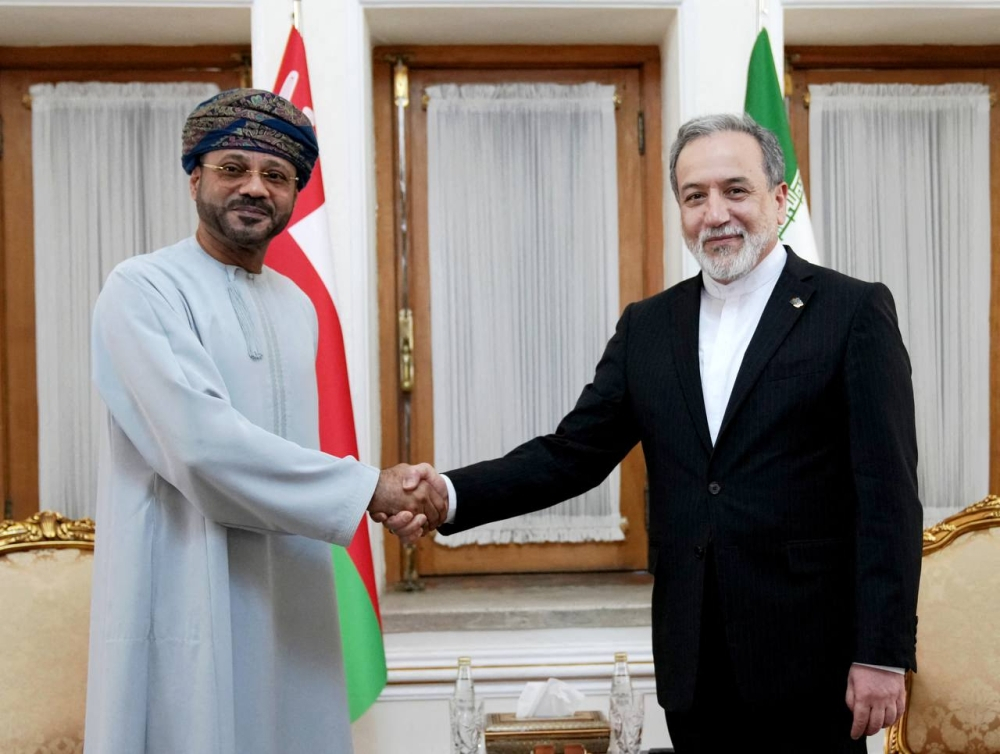
During talks in Tehran on Tuesday, Iranian and Omani foreign ministers discussed a proposed framework for establishing a temporary shipping corridor and a project aimed at clearing mines from parts of the strait.
In a joint statement, the two sides confirmed that discussions were continuing.
Omani Foreign Minister Badr Albusaidi said he hoped the proposed corridor and practical measures to restore safe navigation could be announced soon.
The idea is significant because it could provide a short-term mechanism for commercial shipping while Iran and Oman continue negotiating a more permanent arrangement.
Albusaidi also indicated that questions surrounding the long-term management of the Strait of Hormuz would be addressed later.
That distinction matters.
Rather than attempting to solve every political and security dispute at once, the two countries appear to be exploring whether a temporary maritime arrangement can create enough stability to get shipping moving again.
How could the proposed route work?
Iranian Deputy Foreign Minister Kazem Gharibabadi provided additional details about the proposed arrangement in comments to local media.
Under the plan being discussed, vessels entering the Gulf would travel through Iranian waters. Ships leaving the Gulf would initially use Omani waters before continuing through Iranian waters.
The proposed temporary arrangement could then provide Iran and Oman with between 30 and 60 days to negotiate a permanent route.
That timeline highlights the practical challenge facing both countries.
Opening a major international shipping route is not simply a matter of announcing that ships can pass. It involves questions surrounding maritime jurisdiction, vessel movements, security, navigation, fees, sovereignty and international law.
Iran’s Islamic Revolutionary Guard Corps is also involved in the discussions, according to Gharibabadi, while maps being considered have reportedly been prepared by Iran’s armed forces.
The Revolutionary Guards separately said they had reached an understanding with Oman regarding the sharing of revenues from potential fees collected in the strait.
That proposal has reportedly faced opposition from Washington.
Why haven’t the negotiations produced a final agreement?
The biggest obstacle is that Iran continues to connect the full reopening of the Strait of Hormuz to the wider conflict and its dispute with the United States.
Tehran has demanded that Washington fulfill commitments it says have previously been broken.
Iranian officials have also linked the reopening of the waterway to broader demands, including an end to the war, the lifting of blockades and a resolution to the situation in Yemen.
For Iran, therefore, Hormuz is not simply a shipping problem.
It is part of a much larger geopolitical confrontation involving sanctions, military pressure, regional security and the future relationship between Tehran and Washington.
This makes the negotiations considerably more complicated than a conventional maritime agreement.
Sovereignty is at the heart of the dispute
Behind the discussions over shipping lanes and navigation is a fundamental question: who has authority over the Strait of Hormuz and how should that authority be exercised?
Any long-term arrangement would need to address which waters vessels can use, who is responsible for security, how ships are monitored, whether fees can be collected and how disputes would be handled.
It would also need to satisfy international legal requirements while taking into account the interests of other Gulf countries that depend heavily on the waterway.
Omani researcher Abdallah Baaboud described the negotiations as involving elements of a future governance and security framework for Hormuz.
That helps explain why progress has been slow.
The parties are not merely trying to reopen a road. They are attempting to establish rules for one of the world’s most strategically sensitive maritime passages.
Oman faces a difficult balancing act
Oman has traditionally maintained a reputation for diplomacy and communication across regional divides.
Its current position is particularly challenging.
Muscat wants freedom of navigation restored and appears interested in separating the practical issue of maritime access from the larger conflict.
At the same time, Oman must carefully manage its relationship with Washington while continuing its dialogue with Tehran.
Too much alignment with either side could undermine Oman’s ability to act as an intermediary.
For Muscat, the objective may therefore be less about choosing sides and more about finding a workable regional mechanism that reduces the risk of confrontation.
That could explain why Oman has encouraged the participation of other Gulf states in discussions surrounding the future of the strait.
A broader regional arrangement could make the eventual agreement appear less like a bilateral deal between Iran and Oman and more like a collective framework for safe navigation.
What is Washington saying?
The United States has not publicly responded to the latest Iran-Oman joint statement, although Washington had previously indicated that there had been movement on the Hormuz issue.
US President Donald Trump has repeatedly made claims about American control of the waterway, which Tehran has rejected.
Washington has also placed pressure on Oman over its position.
This leaves Muscat navigating between two powerful interests.
On one side is Iran, a neighboring country with direct control and security interests around parts of the strait.
On the other is the United States, whose military and strategic presence in the Gulf remains a major factor in regional security.
Oman’s challenge is to maintain its diplomatic channel without appearing to endorse unilateral control of the waterway.
Why does the Strait of Hormuz matter to the world?
The importance of Hormuz extends far beyond the countries surrounding it.
The waterway is a critical passage for international energy trade. Oil and gas shipments moving through the Gulf depend heavily on safe and predictable navigation.
Any sustained disruption can affect shipping costs, insurance premiums, energy prices and supply expectations.
For governments, energy companies and financial markets, uncertainty itself can be expensive.
That is why even a temporary corridor could have significance.
A controlled reopening would not necessarily solve the wider conflict, but it could reduce immediate pressure on international shipping and provide breathing room for further negotiations.
Could a temporary corridor become a permanent solution?
That remains uncertain.
The proposed corridor is best understood as a potential first step rather than a final settlement.
If ships can safely move through an agreed route, Iran and Oman could gain valuable time to work on a permanent framework.
But several difficult questions would remain.
Who would supervise the route?
How would vessels be protected?
Who would clear and monitor potential mines?
How would maritime fees be determined?
Which countries would participate?
How would international law be incorporated?
And perhaps most importantly, could the arrangement survive the wider political confrontation between Iran and the United States?
The answers will determine whether the temporary corridor becomes a foundation for long-term stability or simply a short-lived pause in a much larger crisis.
A small opening in a much bigger crisis
The Iran-Oman talks do not represent a complete peace agreement.
They do, however, show that diplomacy is still taking place despite the wider conflict.
That may be the most important development.
A temporary shipping corridor would not erase the political disputes surrounding Iran, the United States or the broader Middle East. It would not immediately resolve sanctions or security disagreements.
But restoring safe navigation could remove one major source of pressure from an already fragile regional environment.
Oman’s approach appears focused on practical progress: get ships moving, reduce immediate risks, involve neighboring countries and create room for more difficult diplomatic discussions.
Whether Tehran, Muscat and Washington can ultimately find common ground remains to be seen.
For businesses watching energy prices, for shipping companies planning routes and for consumers feeling the effects of global market uncertainty, however, even a limited reopening of the Strait of Hormuz could carry enormous significance.
The coming weeks may therefore be crucial.
What happens in this narrow waterway could influence not only regional security, but also the cost and reliability of energy moving across the global economy.
The Strait of Hormuz may be geographically narrow, but the consequences of what happens there are anything but small.