
Iran has firmly stated that its missile programme will remain outside the scope of any future negotiations with the United States, even after both countries reached a new framework agreement aimed at ending recent hostilities and reopening diplomatic talks.
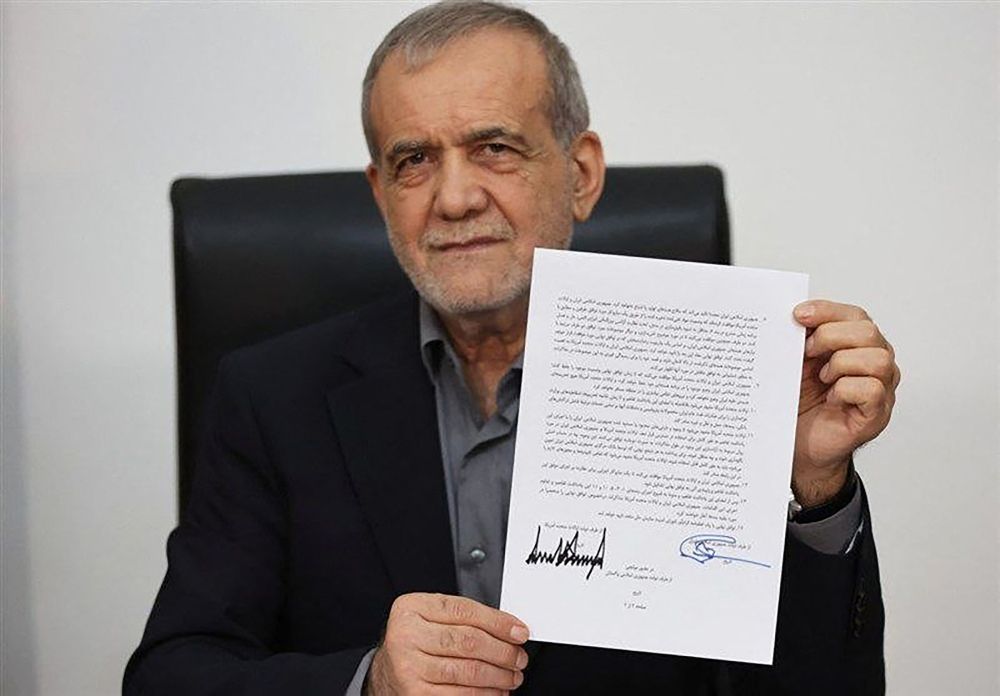
The announcement came shortly after a memorandum of understanding was reportedly signed between US President Donald Trump and Iranian President Masoud Pezeshkian, marking a major step toward de-escalation after a regional conflict that began on February 28 following US-Israeli strikes.
The agreement is intended to pave the way for more detailed discussions focused mainly on Iran’s nuclear programme and the possibility of sanctions relief. However, it notably makes no reference to Iran’s missile capabilities, an issue that has long been a major concern for Washington and its regional ally, Israel.
Iranian foreign ministry spokesman Esmaeil Baqaei made Tehran’s position clear in comments to state media, stressing that the country’s defence systems are non-negotiable.
“Our missiles do not like at all to be talked about by anyone,” he said. “Iranian missiles are only for firing, not for negotiations. Iran’s defence capability will not be discussed in any way, in any process or with any party.”
During the roughly 40-day conflict, Iran’s missile infrastructure came under heavy strikes from US and Israeli forces, while Tehran responded with its own missile and drone operations across the region, escalating tensions on multiple fronts.
Before the outbreak of fighting, US Secretary of State Marco Rubio had already signaled that Iran would be expected to address its ballistic missile programme in any broader security negotiations, citing concerns over threats to Israel and American military bases in the Middle East.
Despite these pressures, Iran has consistently maintained that its missile programme is purely defensive and not open for discussion.
In a recent shift of tone, US President Donald Trump suggested a slightly softer stance, stating that it would be “unfair” for Iran to be completely denied missile capabilities. He added, “I’m saying that if other countries have them, it’s a little bit unfair for them not to have some. A ballistic missile is not the same thing as what we are talking about when we talk nuclear.”
As diplomatic efforts continue, the exclusion of Iran’s missile programme from formal talks highlights one of the most sensitive sticking points in the long-standing tensions between Tehran and Washington.
In the end, while leaders speak of agreements and frameworks, the real challenge remains in what is left unsaid at the negotiation table. For ordinary people watching from the sidelines, each statement is another reminder of how fragile peace can be when security, power, and trust are still being negotiated in real time.