
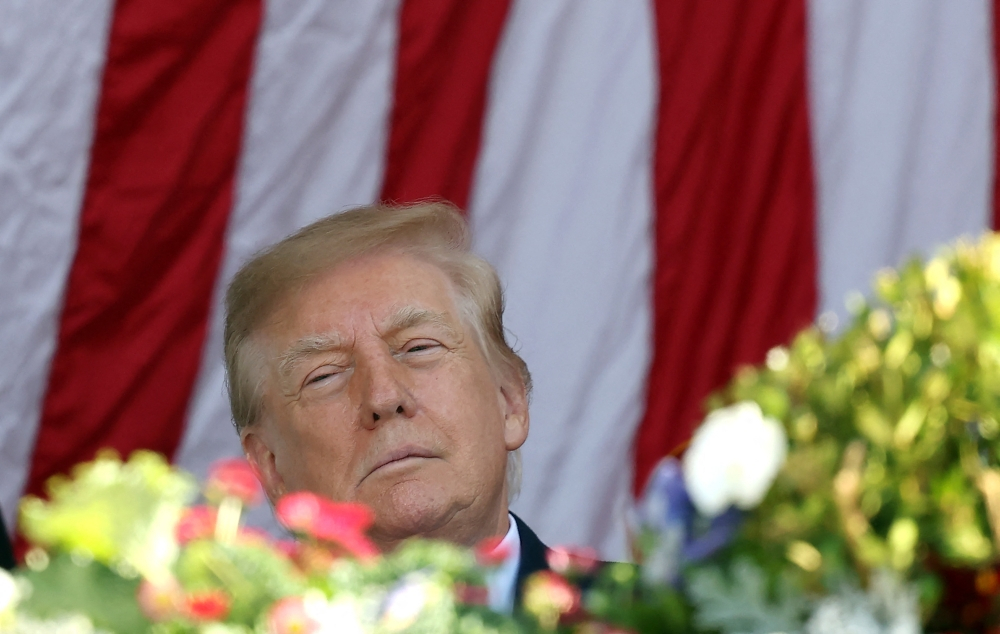
Donald Trump’s upcoming Asian diplomatic tour comes at a challenging moment for his presidency, as political setbacks at home raise questions about his influence in Washington and his ability to shape America’s foreign policy on the world stage.
US President Donald Trump is heading to Asia facing a dramatically changed political landscape at home. Following a major midterm election setback, his administration faces growing political pressure, with Democrats gaining control of both the House of Representatives and the Senate.
The political shift marks a difficult period for Trump as he enters the remaining two years of his presidency. With constitutional restrictions preventing him from seeking another presidential term in 2028, attention is turning towards how he will use his remaining time in office, particularly in international affairs.
His upcoming participation in the ASEAN Summit in the Philippines and the Asia-Pacific Economic Cooperation (APEC) Summit in China offers an opportunity to reinforce his international standing and demonstrate that he remains an influential figure in global politics.
Political observers believe international diplomacy could become an important platform for Trump to regain momentum following his domestic political difficulties.
“After bad midterms, this is how presidents reset,” said Edgard Kagan, an expert at the Center for Strategic and International Studies (CSIS), during a news briefing.
Iran, trade and China dominate the diplomatic agenda
Trump’s Asian visit comes at a time when several major international issues require attention, including tensions involving Iran, trade disagreements and the increasingly complex relationship between Washington and Beijing.
China has described the American midterm elections as an internal matter and expressed its willingness to continue working with the United States despite the political changes in Washington.
However, the shift in congressional power is unlikely to go unnoticed by Asian leaders. Governments across the region will be closely watching how the new political balance influences American foreign policy and its commitments to international partners.
Joshua Kurlantzick, an expert on Southeast Asia and South Asia at the Council on Foreign Relations, suggested that some Asian leaders may privately welcome the political developments.
The conflict involving Iran has created difficulties for several American partners and allies in Asia, raising concerns about regional stability, energy security and the predictability of US foreign policy.
Trump has indicated on several occasions since the midterm elections that renewed military confrontation between the United States and Iran is unlikely.
Meanwhile, Democratic control of Congress could bring a tougher approach towards China. Some lawmakers may seek to challenge what critics describe as the Trump administration’s relatively soft position towards Beijing, particularly on issues affecting American allies and regional security.
Trade policy is another major concern. Trump’s tariffs have placed considerable pressure on Asian economies, many of which depend heavily on international exports and stable access to the American market.
Democratic House leader Hakeem Jeffries has called for Congress to reassert its authority over US trade policy.
Nevertheless, reversing the administration’s existing policies will not be straightforward. The American president retains substantial authority over trade matters and can veto legislation passed by Congress, making any major policy changes politically challenging.
High-profile meetings could shape Trump’s Asian visit
Beyond economic and security discussions, Trump’s Asian tour could become an important opportunity for high-profile diplomatic engagements.
The president has expressed interest in meeting Chinese President Xi Jinping and Russian President Vladimir Putin during the APEC Summit scheduled to take place in Shenzhen, China, on November 18 and 19.
According to Trump, discussions could include nuclear disarmament and efforts to end the conflict involving Iran.
However, political observers believe the significance of such meetings could extend beyond the issues formally discussed.
Kurt Campbell, chair of The Asia Group and a senior diplomat during the Biden administration, suggested that the symbolic value of Trump appearing alongside two influential world leaders could itself be an important objective.
In international politics, a photograph or public appearance involving major world leaders can communicate influence, diplomatic access and political standing.
For Trump, such an encounter could reinforce his preferred image as a central figure in negotiations involving the world’s major powers.
However, the prospect of discussions between Washington, Moscow and Beijing has also raised concerns among some international observers.
Ukrainian President Volodymyr Zelensky has previously warned against a potential “Yalta 2.0”, referring to the 1945 agreements in which major Allied powers helped shape Europe’s post-war political order.
His concern reflects wider fears that decisions involving major international powers could affect smaller countries without adequately considering their interests or sovereignty.
North Korea remains a potential priority
Another issue likely to attract Trump’s attention is North Korea.
Victor Cha, president of geopolitics and foreign policy and Korea chair at CSIS, believes Trump’s political setback could increase his interest in pursuing a significant diplomatic achievement during the remainder of his presidency.
North Korea has long been an important part of Trump’s foreign policy ambitions. His previous engagement with North Korean leader Kim Jong Un brought unprecedented diplomatic attention, although it did not produce a lasting agreement on denuclearisation.
Cha suggested that North Korea could remain a personal legacy issue for Trump, given the central role the president plays in shaping American policy towards Pyongyang.
A renewed diplomatic effort could offer Trump an opportunity to demonstrate his ability to engage with difficult international partners and pursue agreements that previous administrations struggled to achieve.
The bigger question: Can Trump maintain America’s global influence?
Trump’s journey to Asia represents more than a series of diplomatic meetings. It comes at a defining moment for his presidency, when domestic political pressure and international expectations are increasingly intersecting.
Asian governments will be watching closely to understand whether the changes in Washington will influence American commitments to trade, security and regional partnerships.
For the United States, maintaining trust among its allies will remain essential, particularly as China continues to expand its economic and geopolitical influence across the region.
For Trump, the challenge is equally significant. He must demonstrate that political difficulties at home do not automatically translate into reduced influence abroad.
His meetings, statements and diplomatic decisions during the Asian tour could provide an indication of how he intends to shape his remaining years in office.
Ultimately, global leadership is not measured by photographs with powerful leaders or the headlines surrounding international visits. It is measured by the ability to build lasting partnerships, reduce conflicts, create economic opportunities and deliver results that make the world more stable.
As Trump turns his attention towards Asia, the international community will be looking beyond the diplomatic spectacle to see what his leadership can actually achieve.