

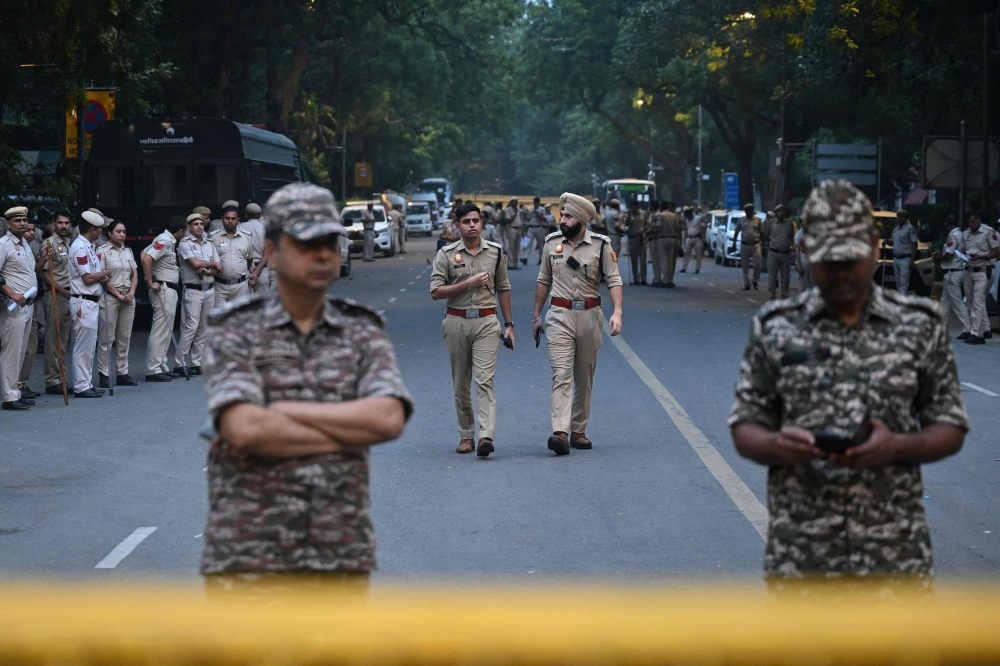
Tensions over India’s voter-roll revision have intensified after authorities in New Delhi closed a central park and tightened security ahead of a planned protest demanding the removal of the country’s chief election commissioner. The demonstration, organised by the Cockroach Janta Party (CJP), has become a focal point of growing political opposition to an electoral revision exercise that critics claim could have deprived millions of people of their voting rights.
The campaign has drawn attention to concerns about electoral transparency, political accountability and the protection of democratic participation in the world’s most populous country. Opposition voices have alleged that the revised electoral rolls could disproportionately affect vulnerable communities and benefit Prime Minister Narendra Modi’s ruling Bharatiya Janata Party (BJP). The Election Commission of India, however, has denied wrongdoing and maintained that the revision process is intended to improve the accuracy of electoral records.
CJP founder Abhijeet Dipke called on supporters to assemble at Central Park in New Delhi, despite heightened security measures and restrictions on public gatherings. His appeal followed the detention of two party colleagues who reportedly breached security barricades at Jantar Mantar while attempting to wave the Indian national flag.
Earlier in the week, police withdrew authorisation for Jantar Mantar to operate as a designated protest site, adding another obstacle for groups seeking to demonstrate in the capital. The latest restrictions have further intensified the dispute between the protest organisers and authorities over access to public spaces for political expression.
Thousands of security personnel were deployed across parts of New Delhi, with yellow metal barricades erected at major intersections and sensitive locations. Delhi Police also prohibited public gatherings around Connaught Place, citing concerns about public order and safety. Authorities warned that violations of the restrictions could result in legal action, although police indicated that selected individuals might be permitted to assemble at an appropriate location.
Delhi’s municipal authorities separately announced that Central Park would remain closed for two days for administrative reasons. The closure came as the CJP prepared for its planned demonstration, raising questions among supporters about whether they would be able to proceed with their campaign.
Dipke said he remained determined to continue despite the possibility of arrest ahead of the protest. In remarks reported by AFP, he challenged the authorities over their response to the movement and insisted that its supporters would not be intimidated. He also argued that waving the national flag should not become grounds for imprisonment.
At the heart of the controversy is a large-scale revision of India’s electoral rolls overseen by Chief Election Commissioner Gyanesh Kumar. Media reports cited in the original report indicate that more than 130 million names have been removed from electoral lists during the exercise. The scale of the removals has triggered public debate over how voter records are verified and whether eligible citizens risk being excluded.
Critics argue that the deletions could disproportionately affect minorities, particularly Muslims, and have called for greater transparency in the process. Election authorities, meanwhile, say the revision is intended to remove duplicate, deceased and fraudulent entries, presenting it as an effort to improve the integrity of electoral records.
The controversy also reflects longstanding political tensions surrounding allegations of electoral fraud and undocumented migration. Members of the BJP have previously claimed that undocumented migrants from neighbouring Bangladesh have entered India’s electoral rolls fraudulently. These allegations remain politically contentious, with questions about voter eligibility and the verification of electoral records continuing to shape the national debate.
Defence Minister Rajnath Singh rejected the opposition’s criticism, accusing opposition parties of attempting to undermine democratic institutions and create unrest. Speaking at a news conference, he argued that their campaign was not genuinely about electoral reform or the chief election commissioner, but rather an attempt to gain political power by creating instability.
The opposing positions have deepened the dispute, with critics demanding accountability and election authorities defending the revision process. The central question remains whether the system can demonstrate that every eligible citizen has a fair opportunity to participate in elections while ensuring that electoral rolls remain accurate and reliable.
Ultimately, the controversy is about more than a protest, a closed park or a political confrontation. The right to vote is a fundamental part of democratic participation, and public confidence depends on people believing that the electoral process is fair, transparent and accessible. As the debate continues in India, the challenge for authorities and political leaders alike is to address legitimate concerns through evidence, accountability and peaceful dialogue, so that no eligible voter feels their voice has been lost.