
Saudi Arabia has reported three deaths, including a Saudia Airlines pilot, following attacks targeting Riyadh’s King Khalid International Airport. The strikes have heightened security concerns across the Saudi capital, disrupted air travel and raised fresh fears about the expanding conflict involving Yemen’s Houthi movement and the Saudi-backed Yemeni government.
According to Saudi Arabia’s civil aviation authority, two attacks on the airport and a Saudia Airlines aircraft resulted in the deaths of three people. The national carrier confirmed the death of its aircraft captain, expressing profound sadness over the incident. The tragedy has added to concerns about the safety of aviation personnel and passengers as the conflict increasingly threatens critical transport infrastructure.
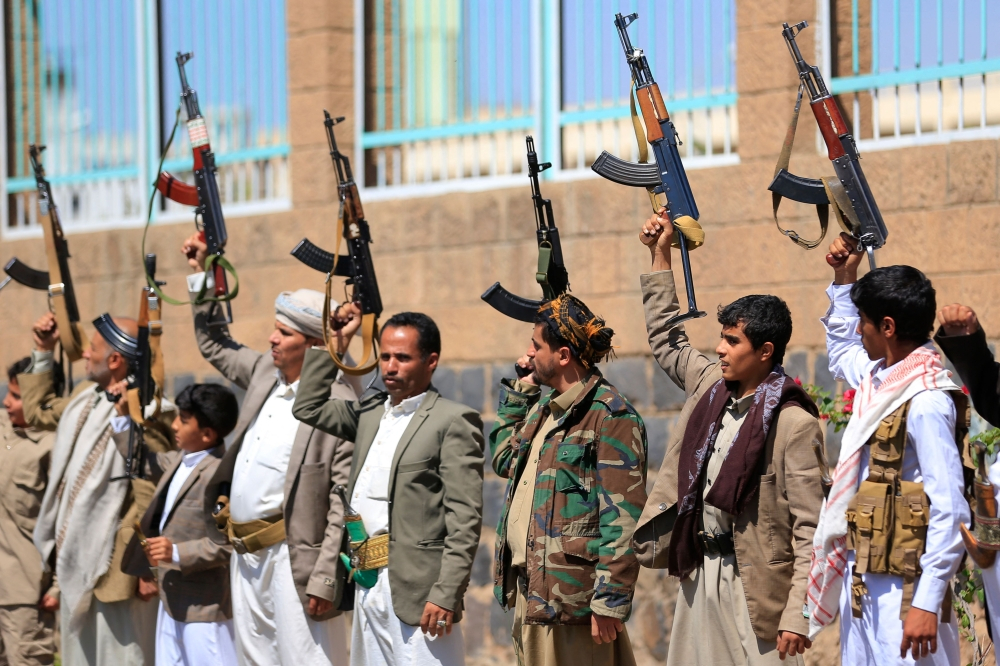
The attacks come amid escalating hostilities between the Houthis, an Iran-backed armed movement, and Yemen’s internationally recognised government, which receives support from Saudi Arabia. Since launching an offensive across the border, the Houthis have repeatedly targeted Saudi territory, including transport hubs, oil installations and other civilian infrastructure.
Saudi Arabia is one of the world’s leading oil exporters, making attacks on its airports and energy facilities a concern that extends beyond the immediate conflict. Any sustained disruption to transport and energy infrastructure in the region could create wider uncertainty for international travel, commercial activity and global energy markets.
Flights disrupted as security concerns grow
The reported attacks caused significant disruption at Riyadh’s King Khalid International Airport, with numerous flights delayed or cancelled. Airport authorities advised passengers to contact their airlines before travelling to confirm their flight arrangements and avoid unnecessary journeys during the disruption.
The security situation also prompted diplomatic missions in the Saudi capital to instruct personnel to shelter in place. International schools reportedly introduced precautionary safety measures as explosions were heard across the city.
Saudi Arabia’s civil defence agency separately reported that debris from intercepted projectiles damaged a kindergarten and a medical complex in Riyadh. Authorities did not immediately provide further details about the extent of the damage or whether anyone was injured at those locations.
The incidents have renewed questions about the vulnerability of civilian infrastructure during an intensifying regional conflict. Airports, educational institutions, medical facilities and energy installations play essential roles in everyday life, and threats to these locations can affect communities well beyond the immediate area of an attack.
Saudi Arabia refuses to bow to military pressure
Saudi Arabia and the Yemeni government forces it supports have been attempting to halt the Houthis’ territorial advances. Their counter-offensive has focused on strategic locations along Yemen’s Red Sea coast, including areas near the Bab al-Mandab Strait, an important maritime passage for international trade and energy shipments.
A regional source told AFP that Riyadh would not give in to what it described as the Houthis’ military blackmail. According to the source, Saudi Arabia would not agree to a truce until Yemeni government forces regained all the territory they had lost in recent weeks.
However, the military situation remains difficult to establish independently. Yemen’s government has claimed progress against Houthi forces in strategic coastal areas, including the port city of Mocha. The Houthis, meanwhile, maintain that they continue to hold their positions.
Military sources from both sides have not reported major changes on the ground that would independently confirm the competing claims.
Houthi military spokesman Yahya Saree said the group had launched missile attacks targeting an airport in Najran and an airbase in Khamis Mushait. The movement has also warned workers to evacuate Saudi oil facilities, following an earlier attack on a major refinery south of Riyadh.
Saudi authorities’ public statements acknowledging damage to civilian locations have been relatively uncommon in recent weeks. Nevertheless, the rapidly changing situation and limited independent access have made it difficult to verify many claims made by the opposing sides.
A conflict with consequences beyond the battlefield
The Houthis have controlled Yemen’s capital, Sanaa, and much of the country’s major population centres since the conflict began in 2014. Saudi Arabia led a military coalition in support of the Yemeni government in 2015, deepening its involvement in a war that has caused widespread destruction and prolonged humanitarian suffering.
The latest escalation illustrates how the conflict continues to threaten not only military positions but also the infrastructure on which civilians depend. Attacks on airports can disrupt family travel, business operations, emergency movements and the delivery of essential supplies. Damage to healthcare and educational facilities can further strain communities already facing insecurity.
The implications also extend to international diplomacy and regional stability. Continued attacks and retaliatory military operations risk making negotiations more difficult, particularly when the parties remain divided over territorial control and the conditions required for a ceasefire.
Although the immediate focus has been on the deaths and disruption in Saudi Arabia, the wider conflict continues to exact a devastating toll on people throughout Yemen.
Civilians in Yemen face worsening hardship
Yemen remains one of the world’s poorest countries, and years of conflict have left millions of people vulnerable to food shortages, displacement, damaged infrastructure and inadequate access to essential services.
According to United Nations data cited in the original AFP report, more than 200,000 people had been displaced since July. The renewed fighting has added further pressure to communities already struggling to secure basic necessities.
In Taiz, western Yemen, Houthi forces have maintained a siege around the government-controlled city, restricting residents’ main supply route to Aden, the government’s temporary capital. Such restrictions can make it increasingly difficult for households to obtain food, fuel, water and other essential goods.
A resident identified as Um Rian described the severity of the situation in stark terms: “There is a crisis in everything: water, gas, vegetables, everything essential.”
Her account reflects the daily reality for civilians caught in a conflict where access to basic supplies can become as urgent a concern as physical safety.
As fighting intensifies, the deaths reported at Riyadh’s airport serve as another reminder that the consequences of war rarely remain confined to the battlefield. Airline employees, families, schoolchildren, healthcare workers and displaced communities all face risks when violence spreads to civilian spaces.
The immediate priority remains the protection of human life, the safety of civilian infrastructure and the delivery of essential assistance to affected communities. Whether the latest escalation leads to further retaliation or creates renewed pressure for negotiations will depend on developments in the coming days.
For ordinary people in Saudi Arabia and Yemen, the hope remains that the violence will not deepen further and that meaningful steps towards security, humanitarian access and a lasting political settlement can emerge from an increasingly dangerous situation.
Source: AFP