
The Government of Jammu and Kashmir has introduced the Jammu and Kashmir Common Duct Policy 2026, a move aimed at making urban infrastructure more organized, efficient and future-ready across the Union Territory.
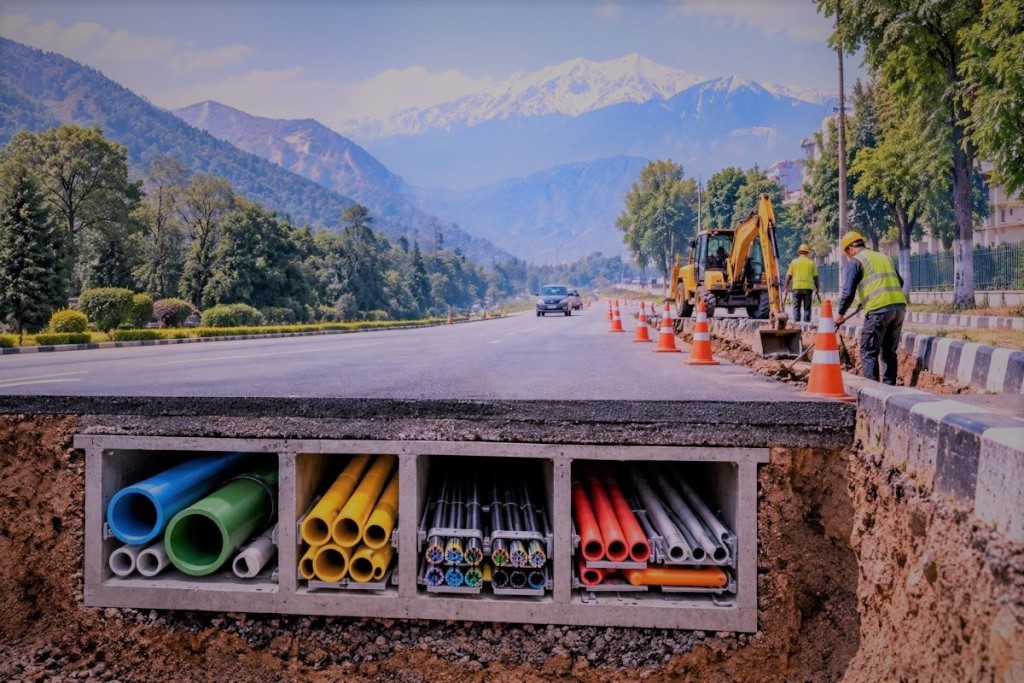
The policy, approved by the Council of Ministers, creates a framework for shared utility corridors that can accommodate essential services such as electricity, water, telecommunications, gas and digital networks. The Office of Chief Minister Omar Abdullah announced the development on X.
One of the key objectives of the policy is to reduce the repeated digging of roads whenever utility providers need to install, repair or expand their networks. Under the new framework, utility ducts will be integrated into newly constructed roads, while existing infrastructure will gradually be retrofitted where required.
The policy also introduces a single-window system for Right of Way clearances, which could make coordination between government agencies and utility providers more streamlined. Cost-sharing arrangements are another important component, helping establish a clearer approach to financing shared infrastructure.
Digital mapping is also expected to play a major role. Through the “Call Before You Dig” platform, utility information can be digitally mapped and accessed before excavation work begins. This can help reduce the risk of damaging existing underground infrastructure while improving coordination between different service providers.
For residents, the biggest visible change could be fewer freshly constructed roads being opened up again and again for utility work. Repeated excavation not only disrupts traffic and daily life but can also contribute to road deterioration, higher maintenance expenses and an untidy urban environment.
The policy is also designed to support better long-term urban planning. By creating infrastructure that can accommodate multiple utilities through shared corridors, Jammu and Kashmir can move toward a more coordinated approach to urban development instead of dealing with utility expansion on a project-by-project basis.
The initiative could become increasingly important as cities across J&K experience growing demand for reliable electricity, water supply, telecommunications and digital connectivity. Planning these networks together from the beginning may help authorities reduce unnecessary disruption while preparing urban areas for future needs.
Beyond roads and utilities, the policy represents a broader shift toward smarter infrastructure management. Better mapping, coordinated permissions and shared utility corridors can give authorities and service providers greater visibility over underground assets and make future maintenance and expansion more predictable.
For people living in Jammu and Kashmir, the real test will be how effectively the policy is implemented on the ground. If the new system delivers on its objectives, residents could see fewer road cuts, better-maintained streets, reduced infrastructure disruption and more efficient delivery of essential services.
At its core, the Jammu and Kashmir Common Duct Policy 2026 is about changing how infrastructure is planned before problems appear. Instead of repeatedly digging up roads whenever a new utility is needed, the government is aiming for a system where different services can be planned, mapped and managed together. That may sound like a technical change, but for ordinary residents, it could ultimately mean smoother roads, fewer disruptions and cities that are better prepared for the future.