
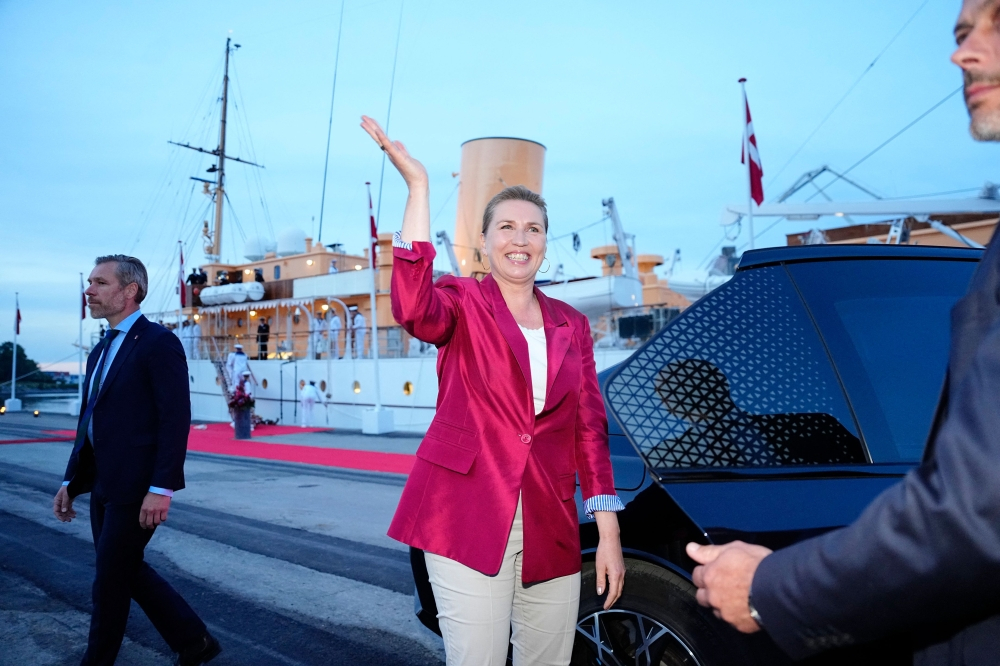
Denmark’s Prime Minister Mette Frederiksen has successfully secured a third term in office after reaching an agreement to form a new left-leaning minority coalition government, bringing an end to months of political uncertainty following the country’s inconclusive general election in March.
Speaking to reporters after meeting with King Frederik X, Frederiksen confirmed that an agreement had finally been reached after extensive negotiations among several political parties.
According to an official statement from the royal palace, the newly formed coalition will include Frederiksen’s Social Democrats, the Socialist People’s Party, the centre-left Radikale Venstre, and the centrist Moderates.
The agreement marks a significant political achievement for Frederiksen, who has remained one of Denmark’s most influential leaders in recent years. At 48 years old, she now begins her third term as prime minister, reinforcing her position as a central figure in Danish politics.
Frederiksen gained international attention earlier this year when she firmly rejected comments from former U.S. President Donald Trump regarding Greenland, the autonomous Danish territory. Her response was widely viewed as a strong defense of Denmark’s sovereignty and national interests.
The prime minister announced that her government’s political agenda will be presented to the public today, followed by the introduction of the new cabinet.
The March 24 election left Denmark politically divided, with neither the traditional left-wing bloc nor the right-wing bloc securing enough seats to form a majority government. The fragmented result triggered lengthy negotiations as parties struggled to build a workable coalition.
Together, the four coalition parties now control 82 of the 179 seats in parliament. Reports suggest that additional support may come from a separate alliance of left-wing and green parties, helping the government maintain stability and pass key legislation.
Frederiksen expressed confidence in the coalition’s ability to deliver results.
“I think everyone will be surprised to see how determined we are,” she stated.
She also emphasized that the government’s plans are designed not only to benefit people currently living in Denmark but also future generations and animal welfare. Her comments reflect one of the major issues that shaped the election campaign: industrial pork farming, a highly profitable industry that has also faced criticism for its environmental impact.
Despite remaining Denmark’s largest political party, the Social Democrats recorded their weakest election result since 1903, securing 38 seats in parliament. Nevertheless, the party retained enough support to remain at the center of government formation efforts.
Initial coalition discussions led by Frederiksen failed to produce an agreement, while subsequent attempts by the liberal Venstre party also proved unsuccessful. The deadlock prompted King Frederik X to reappoint Frederiksen and give her another opportunity to build a governing coalition—an effort that ultimately succeeded.
The election also highlighted the continued presence of right-wing and anti-immigration movements in Denmark. The Danish People’s Party more than tripled its support compared to the previous election, securing approximately nine percent of the national vote. While the party no longer holds the influence it once enjoyed, its resurgence signals that immigration remains an important issue for many Danish voters.
Collectively, Denmark’s three major anti-immigration parties captured around 17 percent of the vote, reflecting a level of support that has remained relatively stable over the past two decades.
As Denmark moves forward under Frederiksen’s leadership, attention will now turn toward how the new coalition addresses economic growth, environmental concerns, social welfare, agriculture, and national security. The government faces the challenge of balancing diverse political priorities while maintaining support from a fragmented parliament.
For many Danes, the successful formation of a government brings a sense of stability after months of uncertainty. The coming months will reveal whether Frederiksen’s third administration can translate political compromise into meaningful action and long-term progress for the nation.