
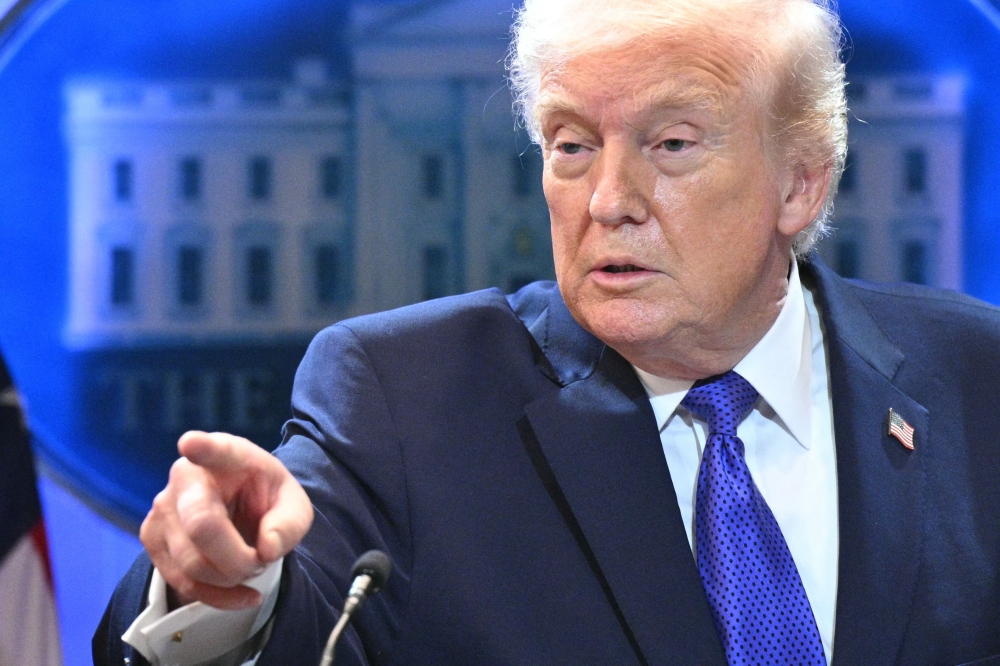
In a significant diplomatic and economic development, US President Donald Trump announced that he would instruct relevant agencies to remove Vietnam from the United States’ strategic export control list. The statement followed his first in-person White House meeting with Vietnam’s top leader, To Lam, marking a pivotal moment in US–Vietnam relations.
According to Vietnam’s Government News website, Trump confirmed his intention to act swiftly, signaling what could become a major turning point in technological and trade cooperation between the two nations.
A First Meeting That Signals New Momentum
The meeting took place in Washington after To Lam attended the inaugural session of Trump’s newly formed “Board of Peace.” While diplomatic symbolism mattered, the substance of the talks carried even greater weight.
For Vietnam, removal from the export control list would mean expanded access to advanced American technologies — a move that could accelerate its ambitions in manufacturing, semiconductors, digital innovation, and aerospace development. For the United States, the shift may strengthen strategic partnerships in Southeast Asia amid evolving global economic alignments.
Trade Tensions and Tariff Battles
The announcement comes against the backdrop of tense trade negotiations. The US and Vietnam had been engaged in prolonged discussions after the US Supreme Court ruled that many of Trump’s sweeping tariffs were illegal.
Earlier this year, when Trump unveiled his so-called “Liberation Day” tariffs in April, Vietnam found itself heavily impacted. At the time, Vietnam held the third-largest trade surplus with the United States, behind only China and Mexico. As a result, it was hit with one of the steepest tariff rates in the administration’s aggressive trade push.
However, by July, Hanoi negotiated a reduction — securing a minimum 20 percent tariff rate, significantly down from more than 40 percent. In exchange, Vietnam agreed to further open its markets to American goods, including automobiles.
Just hours after the Supreme Court’s ruling, Trump signed off on a global 10 percent tariff affecting all countries, reinforcing his administration’s broader recalibration of trade policy.
Multi-Billion Dollar Aviation Deals
Economic cooperation was also reinforced through massive aviation agreements this week.
Three Vietnamese airlines collectively announced nearly US$37 billion in aircraft purchases from American aerospace giants.
Sun PhuQuoc Airways, a rising airline in Vietnam’s expanding aviation sector, placed a US$22.5 billion order for 40 Boeing 787 Dreamliners — long-haul aircraft designed for international expansion.
Meanwhile, Vietnam Airlines signed an US$8.1 billion agreement to purchase approximately 50 Boeing 737-8 aircraft, strengthening its regional and medium-haul fleet.
These agreements are more than commercial transactions. They represent long-term strategic alignment, job creation in the United States, industrial growth in Vietnam, and a visible demonstration of trust between the two governments.
Strategic Implications Beyond Trade
Removing Vietnam from the US export control list would not merely be a technical adjustment. It would carry symbolic and geopolitical weight.
Vietnam has emerged as a crucial manufacturing hub and a key player in global supply chain diversification. Greater access to advanced US technologies could help the country move further up the value chain, from assembly-based manufacturing toward high-tech innovation.
For Washington, deepening ties with Hanoi may reinforce economic resilience and expand influence in Southeast Asia, particularly as global competition intensifies.
The Human Side of Policy Decisions
Behind the tariffs, aircraft contracts, and policy lists are real people whose futures depend on these decisions.
Factory workers in Vietnam hoping for more stable jobs. Engineers in America building aircraft destined for Asian skies. Small business owners on both sides watching trade policies shape their survival. Students aspiring to enter the tech industry. Families relying on growing industries for economic security.
Trade agreements are often measured in billions of dollars. But their true impact is measured in livelihoods, opportunity, and hope.
If the removal from the export control list proceeds as indicated, it could unlock new chapters of collaboration — not just between governments, but between industries, innovators, and everyday citizens striving for growth and stability.
As global markets remain uncertain and political landscapes shift, this development signals that dialogue and negotiation still hold the power to reshape economic futures.