
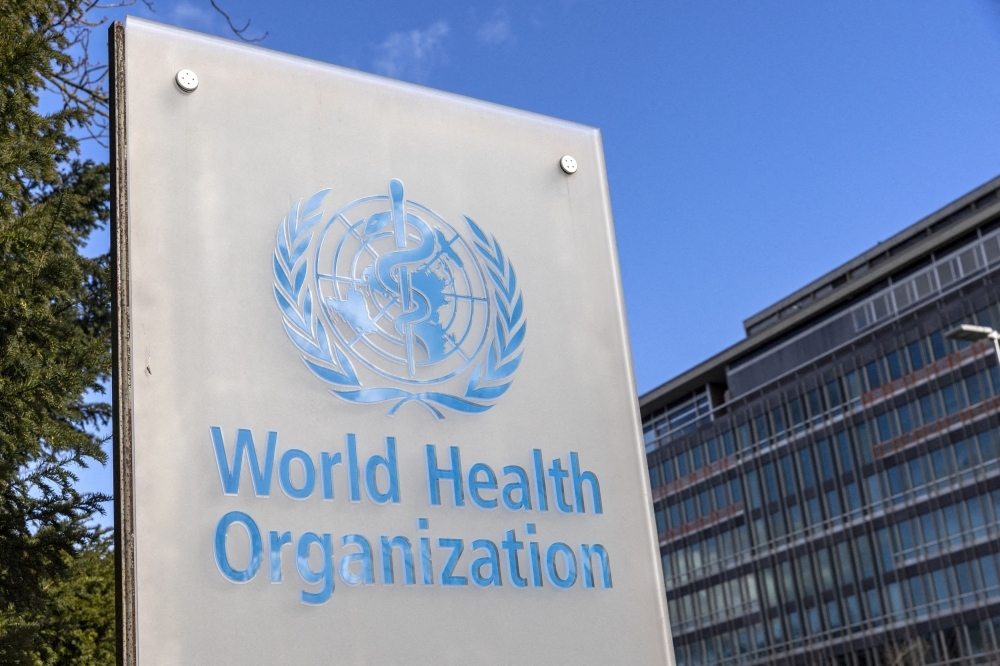
The United States is scheduled to formally leave the World Health Organization on Thursday, a move ordered by President Donald Trump that has triggered serious concerns about legality, public health, and global cooperation. The decision comes despite a US law that requires Washington to pay all outstanding dues before withdrawing from the United Nations health agency. According to the WHO, the US currently owes nearly US$260 million, roughly RM1.1 billion, in unpaid fees.
President Trump issued the withdrawal notice on the first day of his 2025 presidency through an executive order. While US law mandates a one year notice period along with full payment of dues before an exit can be completed, the administration has signaled it does not intend to send further funds to the organization.
A US State Department spokesperson said the administration believes the WHO failed to properly contain, manage, and share critical information during past global health crises, claiming those failures cost the United States trillions of dollars. The spokesperson added that the president had exercised his authority to halt any future transfer of US government funds, support, or resources to the WHO, arguing that American taxpayers have already paid more than enough.
Global health leaders and experts have spent months urging Washington to reconsider. WHO Director General Tedros Adhanom Ghebreyesus recently appealed publicly for the US to reverse its decision, warning that the move would harm both America and the wider world. He stressed that leaving the WHO would weaken collective efforts to respond to health emergencies that do not respect borders.
The WHO has confirmed that the US has not yet paid its dues for 2024 and 2025. Member states are expected to address the US departure and its implications at the WHO executive board meeting in February. Legal experts have also weighed in, with Lawrence Gostin of Georgetown University calling the withdrawal a clear violation of US law, while noting that the administration is unlikely to face immediate consequences.
Speaking at the World Economic Forum in Davos, Bill Gates, chair of the Gates Foundation and a major supporter of global health initiatives, said he does not expect the US to rejoin the WHO anytime soon. While he plans to continue advocating for US participation, Gates emphasized that global health efforts depend heavily on the organization’s leadership and coordination.
For the WHO, the loss of its largest financial contributor has already created a budget crisis. The agency has cut its senior management team by half and scaled back programs across departments. With the US historically providing around 18 percent of WHO funding, the organization is now preparing to reduce its workforce by about a quarter by mid year. How future collaboration between the US and the WHO will function remains uncertain.
Public health experts warn that the consequences extend far beyond budgets and staffing. Weakening global disease surveillance and response systems could leave countries, including the United States itself, more vulnerable to future health threats. As one expert noted, international cooperation is the backbone of early detection and rapid response in global health emergencies.
Beyond politics and legal disputes, this decision carries a human cost. At its core, global health is about protecting lives, sharing knowledge, and standing together when the world faces common threats. As nations debate policies and funding, millions of ordinary people rely on coordinated health systems to stay safe. The question now is not just what this withdrawal means for institutions, but what it means for humanity in an increasingly interconnected world.