

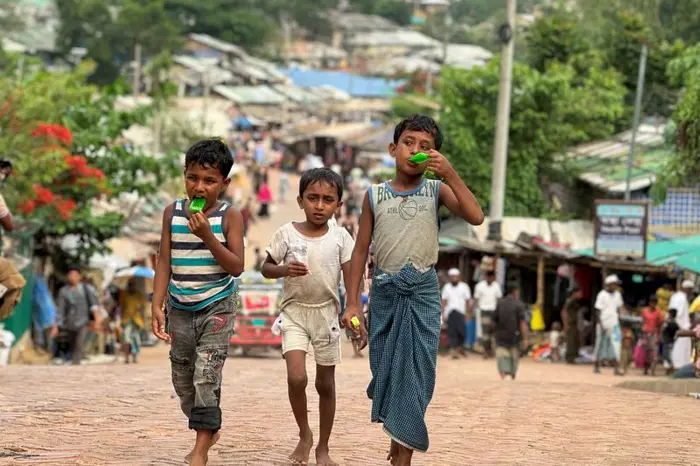
Climate change is creating another crisis for millions already forced to flee their homes. Nearly 90 million forcibly displaced people are living in countries increasingly threatened by extreme heat, droughts and devastating floods, according to a new report by the United Nations High Commissioner for Refugees (UNHCR).
The warning comes ahead of the COP31 climate summit in Antalya, Turkey, where world leaders and policymakers are expected to address the growing impact of climate change. The report highlights an alarming reality: for millions of refugees and displaced communities, escaping conflict does not necessarily mean reaching safety. Environmental threats are increasingly making their lives more difficult and uncertain.
According to UNHCR, nearly three-quarters of the world’s forcibly displaced population live in countries facing serious climate-related risks. Nations including Afghanistan and Bangladesh are among those particularly exposed to these challenges. The findings underline how conflict, forced displacement and environmental instability are becoming increasingly interconnected.
Anton Leis Garcia, UNHCR’s Assistant High Commissioner for Operations, stressed that climate adaptation in fragile and displacement-affected communities is essential for survival. He called for climate financing to reach the people and regions facing the greatest risks, warning that vulnerable populations cannot be left behind as global temperatures continue to rise.
The report also shares the difficult experience of a Sudanese refugee who fled fighting in Al-Fashir in June 2023 and sought safety at the Farchana refugee settlement in eastern Chad. Even after escaping conflict, she continues to face another daily struggle: finding safe drinking water.
She described situations in which she sometimes goes an entire week without access to safe water. As temperatures increase and nearby seasonal riverbeds dry up, she is forced to travel increasingly long distances to find alternative water sources. Her experience reflects the challenges faced by countless displaced families whose basic needs are becoming harder to meet.
Climate change threatens safe returns home
UNHCR also warned that climate change is making it increasingly difficult for refugees and displaced people to return home and rebuild their lives sustainably.
During the first half of 2026, more than two-thirds of refugee returns were to countries highly exposed to climate hazards. This creates serious concerns that people who have already experienced displacement could be forced to leave their homes again because of environmental conditions.
Syria is one example of this growing challenge. Nearly four million displaced people have recently returned, but many are now confronting worsening water shortages and unpredictable rainfall. Flooding along the Euphrates River in May also damaged homes and displaced thousands of people, adding further pressure to communities attempting to recover.
Returning home should represent an opportunity to rebuild, restore stability and reconnect with families and communities. However, when homes, livelihoods and essential resources remain vulnerable to extreme weather, the possibility of a secure future becomes increasingly uncertain.
Extreme heat could put refugee communities in danger
The report raises further concerns about rising temperatures across sub-Saharan Africa, where the consequences of extreme heat could become particularly severe.
By 2050, approximately one in three refugee settlements across the region could experience at least 100 days of dangerous heat every year. Such conditions could threaten public health, employment opportunities, food security and the ability of families to maintain their livelihoods.
The situation could be even more serious in certain Ethiopian settlements. In places such as Helaweyn, dangerous heat could persist for more than 200 days annually, increasing the risks of heatstroke and premature death.
For people living in refugee settlements, extreme temperatures are especially dangerous because access to cooling facilities, clean water and reliable electricity is often limited. Without these essential resources, escaping dangerous heat becomes a daily challenge.
The report emphasises that climate adaptation must consider the realities of displaced communities, particularly those living in overcrowded settlements with limited infrastructure and essential services.
El Niño could increase displacement risks
UNHCR has also warned that a forecast exceptionally strong El Niño could intensify climate-related challenges across several countries already hosting large displaced populations.
In East Africa, severe flooding could displace as many as three million people in Somalia, Kenya, South Sudan and Uganda by the end of 2026.
Meanwhile, countries across the Sahel could experience worsening droughts, flooding and conflict, increasing competition over already limited natural resources. Several parts of Asia are also facing heightened risks from droughts, floods and cyclones.
These overlapping challenges demonstrate that climate-related displacement is not simply an environmental concern. It is also a humanitarian, economic and development issue that requires coordinated international action.
When communities lose access to water, agricultural land, shelter and reliable sources of income, the consequences can extend far beyond immediate environmental damage. Families may be forced to migrate, children may lose access to education, and already vulnerable communities can face even greater uncertainty.
UNHCR calls for stronger climate financing
Ahead of COP31, UNHCR is urging governments and international climate-financing institutions to increase financial support for climate adaptation in fragile and conflict-affected countries.
One of the biggest concerns highlighted in the report is the unequal distribution of climate finance. Only around 10% of global climate financing reaches fragile or conflict-affected countries, despite the enormous challenges these regions face.
A separate United Nations report released on Wednesday also highlighted the growing financial gap, finding that wealthy countries are falling significantly short of the estimated $305 billion required annually to help developing nations adapt to climate change.
As extreme weather events become more frequent and severe, the need for meaningful investment in climate resilience is becoming increasingly urgent.
Funding must support practical solutions, including reliable access to clean water, stronger housing infrastructure, early warning systems, sustainable energy, improved healthcare facilities and climate-resilient livelihoods.
For displaced families, these investments are not simply long-term development goals. They can determine whether people have safe drinking water, whether children can attend school, whether families can remain in their communities and whether returning home is a realistic possibility.
A humanitarian crisis that demands global attention
The warning from UNHCR highlights a reality that deserves greater international attention: millions of people are facing multiple crises at the same time. They are escaping violence, rebuilding their lives and trying to survive in environments increasingly threatened by climate change.
Climate change does not affect everyone equally. People with limited financial resources, inadequate housing, restricted access to healthcare and little protection from extreme weather often face the greatest consequences, despite having fewer opportunities to prepare or recover.
As COP31 approaches, the international community faces an important responsibility. Climate commitments must translate into real assistance for the communities that need it most.
For the millions already displaced by conflict and instability, climate change is making the search for safety even more complicated. They need more than temporary shelter or promises of international support. They need clean water, secure homes, resilient communities and the opportunity to rebuild their futures with dignity.
The climate crisis is no longer just about protecting the planet for future generations. It is also about protecting the lives of people who are struggling to survive today.


