
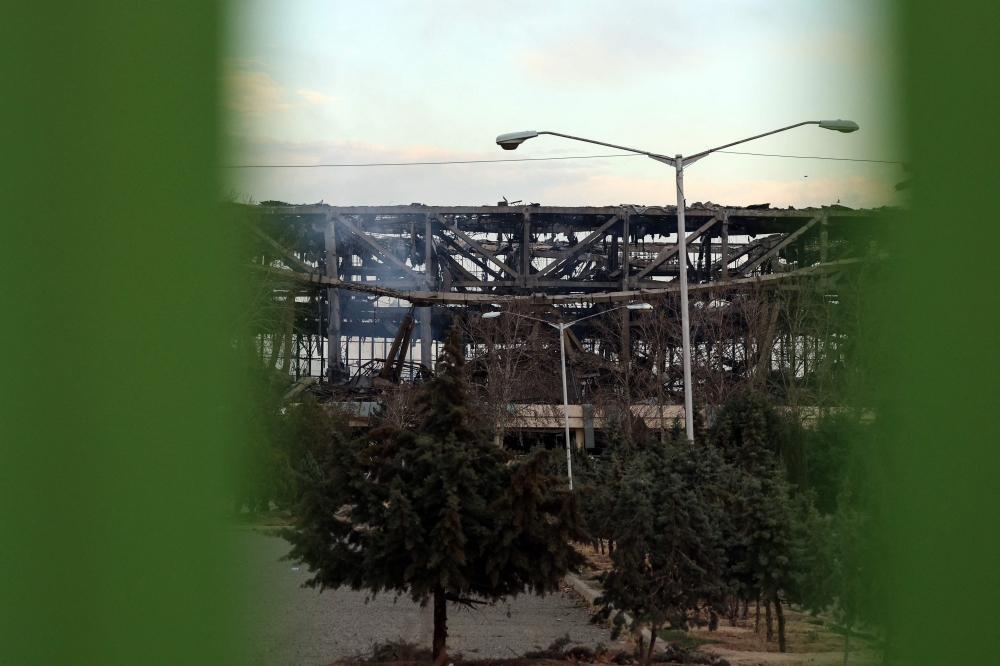
Tehran woke to the sound of explosions once again on Friday as heavy strikes were reported across the Iranian capital. The attacks came shortly after Israel announced it was targeting what it called “regime infrastructure,” signaling what military leaders described as a new phase in the escalating conflict between Israel and Iran, which has now entered its seventh day.
The confrontation, which began with joint strikes involving the United States and Israel, has quickly expanded into a wider regional crisis. As the situation grows more volatile, countries across the Middle East are feeling the ripple effects — from Lebanon’s rising death toll to security threats reported in Gulf nations.
Intensified Strikes Mark New Phase of War
According to Israeli officials, military operations are entering a more aggressive stage aimed at weakening Iran’s leadership structure and military capabilities. Israel’s military chief, Lieutenant General Eyal Zamir, said the campaign would continue evolving with further strategic actions.
He hinted that more operations were planned but declined to reveal details.
Meanwhile, U.S. Defense Secretary Pete Hegseth indicated that American military involvement could increase significantly. He stated that the level of military pressure over Iran and its capital could surge dramatically in the coming days.
Reports from Iranian media confirmed that powerful explosions were heard across Tehran early Friday morning. The strikes followed Israel’s declaration that it was targeting government-linked infrastructure inside the city.
Iran Responds with Missile Attacks
Iran responded swiftly to the offensive. The Islamic Revolutionary Guard Corps announced it had launched missiles toward Tel Aviv following earlier explosions that damaged a residential building in central Israel.
Late Thursday night, journalists on the ground reported hearing two nearly simultaneous waves of explosions in Tel Aviv. Bright streaks of rockets were also visible in the skies above the coastal city of Netanya, further north.
The exchange of fire has intensified fears that the conflict could spiral into a broader regional war involving multiple nations.
Lebanon Faces Mounting Casualties
Lebanon has become one of the most affected neighboring countries as tensions spill beyond Iran and Israel. The Lebanese Health Ministry reported that Israeli air strikes across the country have killed at least 123 people since the conflict began.
The escalation follows missile launches by Hezbollah, the Iranian-backed group operating in Lebanon, which fired projectiles toward Israel in retaliation for the war.
Large numbers of civilians have fled their homes amid fears of further attacks. Entire neighborhoods in the southern suburbs of Beirut have emptied after warnings from Israeli forces that the area could be targeted.
Lebanon’s National News Agency described the once-busy district as “almost empty.”
Families displaced by the fighting have been forced to seek shelter wherever they can. On Beirut’s shoreline, hundreds of people gathered on the beach with little more than the belongings they managed to carry.
Among them was a 61-year-old man named Yousef, who said this was the second time he had been forced to sleep outdoors after fleeing violence. He had also evacuated during the 2024 war between Israel and Hezbollah.
He said survival in such circumstances often feels like pure chance.
Only fate, he said quietly, determines who lives and who doesn’t.
Yousef explained that he had sent his family across the border to Syria for safety while he remained behind, uncertain whether to risk returning home.
Looking out at the sea, he asked a question shared by many caught in the conflict:
“Why this war?”
Limited Information From Inside Iran
Inside Iran, the flow of information has been heavily restricted. A widespread internet blackout has made it difficult for people both inside and outside the country to understand the full scale of the impact.
According to internet monitoring organization NetBlocks, connectivity across Iran dropped to around one percent of normal levels.
Authorities have also warned citizens against using virtual private networks (VPNs), further limiting communication.
Despite the tension, brief glimpses of everyday life continue to appear in Tehran. On Thursday, some residents were seen trying to maintain normal routines — children playing with balloons and parents accompanying their children through quiet streets.
But the atmosphere remains tense.
Plainclothes security personnel have reportedly increased their presence throughout the city. One engineer living in Tehran said patrols regularly stop people and check their phones, creating an environment of fear and uncertainty.
Civilians Describe Fear and Chaos
For many civilians, the experience has been terrifying.
Ugandan student Oscar Nyegyema, who was evacuated from Tehran and returned home to Entebbe, described the fear he felt during the bombardment.
He said the strikes shook the ground beneath them, making it difficult to tell how close the explosions were.
Everyone around him feared the worst.
People were terrified, unsure whether they would survive long enough to escape the city.
Regional Attacks Expand Conflict
The conflict has also reached several Gulf countries.
Qatar confirmed that its air defense systems intercepted a drone believed to be targeting the U.S. military base at Al-Udeid, one of the largest American bases in the region.
Bahrain reported that Iranian projectiles struck a hotel and two residential buildings in its capital city. Authorities said there were no casualties.
Saudi Arabia announced that its defense forces successfully intercepted three ballistic missiles.
Across the Gulf region, at least 13 people have died since the conflict began. Among the victims was an 11-year-old girl in Kuwait.
The fighting has even extended far beyond the Middle East. Reports indicated that a U.S. submarine torpedoed an Iranian frigate near the Sri Lankan coast, while Azerbaijan warned it could retaliate after a drone attack damaged an airport.
Rising Casualties Across the Region
An Iranian state-run foundation claims that more than 1,200 people have died in Iran due to joint U.S. and Israeli strikes. Independent verification of this number has not been possible.
The U.S. military confirmed that six American personnel have died since the conflict began.
In Israel, at least 11 people have been killed by Iranian attacks.
The numbers reflect a rapidly worsening humanitarian situation as both sides continue to exchange strikes.
Diplomacy Appears Unlikely For Now
Iran’s Foreign Minister Abbas Araghchi signaled that negotiations are unlikely at this stage.
He said Tehran has not requested a ceasefire and sees no reason to begin negotiations with the United States.
Washington also indicated the conflict may continue for some time. U.S. officials stated that the military has ample resources to sustain operations.
Defense Secretary Hegseth emphasized that the United States had only begun its campaign and would continue to act decisively.
However, U.S. Central Command leader Admiral Brad Cooper noted that the intensity of Iranian attacks appears to be decreasing.
He said ballistic missile strikes from Iran had dropped significantly since the first day of the war, while drone attacks had also declined.
Debate Over Iran’s Future Leadership
Adding another layer of controversy, U.S. President Donald Trump said he believes Washington should have influence over who becomes Iran’s next leader.
The comments followed the death of Iran’s Supreme Leader Ayatollah Ali Khamenei during the initial strikes at the start of the conflict.
Trump dismissed the possibility that Khamenei’s son, Mojtaba Khamenei, could succeed him, calling him unacceptable.
He said the United States hopes to see a leader who can bring peace and stability to Iran.
At the same time, he warned that if such leadership does not emerge, the conflict could continue.
Global Markets and Energy Concerns
The ongoing war has already disrupted global markets and energy supplies.
Oil prices surged earlier in the week due to fears that Iran could block the Strait of Hormuz, a critical passage through which a large share of the world’s energy supply travels.
While prices stabilized somewhat, uncertainty continues to weigh heavily on global financial markets. Asian stock markets saw declines on Friday as investors reacted to the expanding conflict.
Iran maintains that it has the ability to control the Strait of Hormuz if necessary, though U.S. officials say American forces are prepared to escort shipping vessels if tensions escalate.
The Human Cost Behind the Headlines
Behind every military announcement, political statement, and strategic calculation lies a far more painful reality — ordinary people caught in circumstances they never chose.
Families are fleeing their homes. Parents are trying to calm frightened children. Students, workers, and elderly citizens are suddenly forced to confront the terrifying uncertainty of war.
In Beirut, people sleep on beaches.
In Tehran, families listen for explosions in the night.
In Tel Aviv, civilians rush to shelters when sirens sound.
And across the region, one question echoes again and again in the hearts of those living through it:
Why must innocent people suffer when nations go to war?
Until diplomacy replaces destruction, that question will continue to haunt every city touched by this conflict.