
Somalia and the African Union voiced strong objections on Friday after Israel became the first country to formally recognise Somaliland as an independent nation. The move ignited swift diplomatic reactions across Africa and beyond.
Somaliland broke away from Somalia in 1991, establishing its own institutions and pushing for international recognition ever since. Its current president, Abdirahman Mohamed Abdullahi, has made this goal central to his agenda.
Israel’s announcement that it now regards Somaliland as an “independent and sovereign state” drew a sharp rebuke from Somalia, which described the move as a deliberate affront to its sovereignty and a threat to regional stability. The African Union echoed that concern, warning that such recognition could set a troubling precedent affecting peace and security across the continent. AU officials reiterated that Somaliland remains an integral part of Somalia.
Israel framed its decision as aligned with the spirit of the Abraham Accords, the normalisation agreements reached in recent years between Israel and several Arab states. Prime Minister Benjamin Netanyahu’s office added that Abdullahi had been invited to visit.
While Israel celebrated the announcement, other nations reacted cautiously or critically. The Palestinian Authority rejected the recognition and warned against any support that could facilitate displacement of Palestinians. Turkey condemned the move as interference in Somalia’s internal affairs, while Egypt consulted regional partners to express support for Somalia’s unity and territorial integrity.
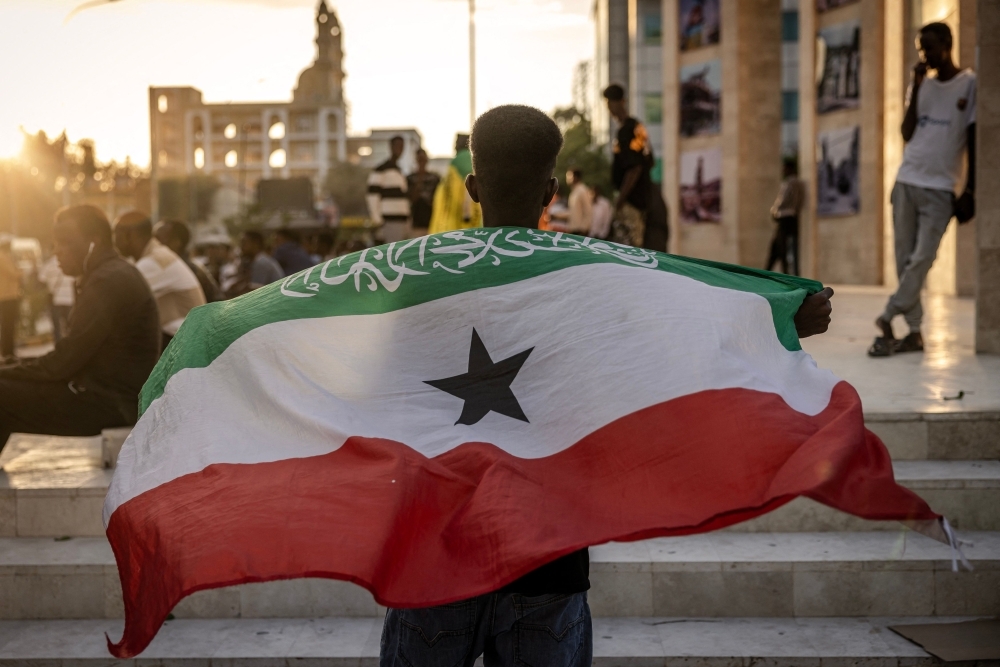
In Hargeisa, Somaliland’s capital, supporters flooded the streets waving flags and celebrating what they called a historic milestone. Abdullahi hailed Israel’s decision as the beginning of a strategic partnership.
Somaliland functions as a self-declared republic with its own currency, security forces, and administrative systems. Yet, the absence of international recognition has limited its economic opportunities and access to global finance, leaving the territory struggling with poverty. Its strategic location along the Gulf of Aden and the Red Sea has drawn renewed geopolitical interest, especially amid broader regional security concerns.
Security analysts note that Israel’s outreach in the Red Sea region may be tied to strategic calculations, including countering threats from Yemen’s Houthi movement. Recent conflicts and shifting alliances have underscored the importance of maritime routes, security partnerships, and access points along the Horn of Africa.
An earlier agreement between Ethiopia and Somaliland to lease coastal territory for port and military access had already angered Somalia, highlighting how regional dynamics remain fragile. Efforts by Israel to strengthen ties in Africa and the Middle East have recently been complicated by ongoing conflicts, particularly in Gaza, which have strained diplomatic outreach.