
Japan has taken a bold and unprecedented step to secure its future supply of critical minerals. A Japanese deep-sea mining vessel has set sail on a month-long mission to explore rare earth–rich seabed mud near Minamitori Island, a remote coral atoll located nearly 1,900 kilometers southeast of Tokyo. The move signals Tokyo’s growing determination to reduce its heavy reliance on China at a time when global supply chains are under intense geopolitical pressure.
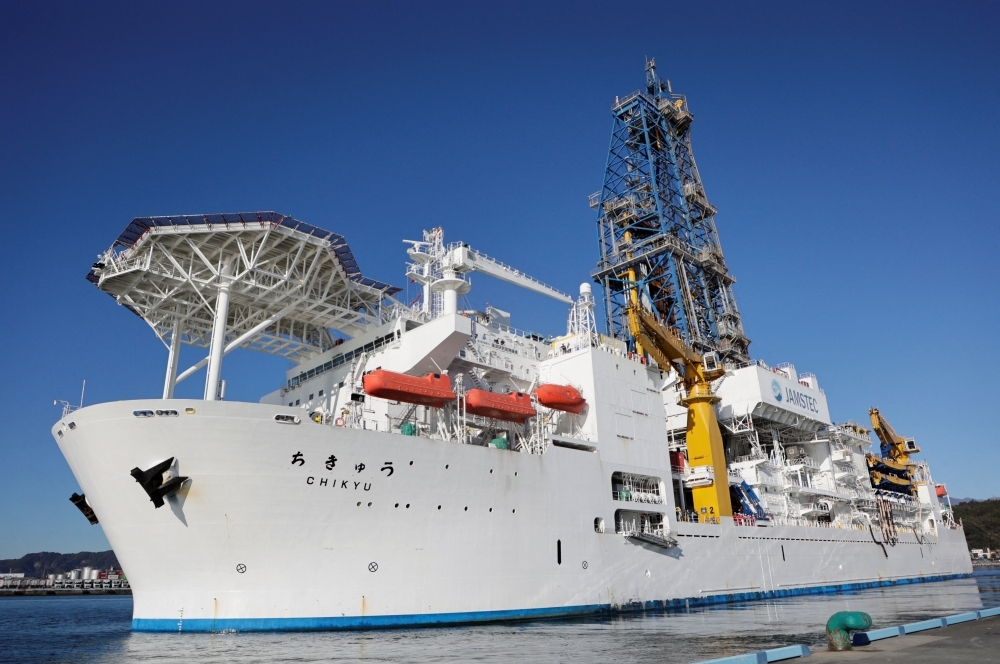
The mission, led by the government-backed test vessel Chikyu, marks the world’s first attempt to continuously extract rare earth–bearing sludge from an extraordinary depth of 6 kilometers beneath the ocean surface. If successful, it could reshape how nations source the minerals that power modern life, from electric vehicles and smartphones to advanced military systems.
Japan’s urgency is not accidental. Like many Western economies, the country has been working for years to diversify its supply of rare earths, but recent diplomatic tensions with Beijing have accelerated those efforts. China, which dominates global rare earth production, has tightened export controls on materials with both civilian and military uses, raising alarm across industries that depend on these resources.
Speaking as the vessel departed from Shizuoka port under clear skies and the watchful presence of Mount Fuji, Shoichi Ishii, head of the project, described the moment as deeply emotional. After seven years of preparation, the confirmation tests are finally underway. According to Ishii, successfully recovering minerals from such extreme depths would not only be a technological milestone but also a critical step toward diversifying Japan’s rare earth procurement.
The Chikyu, carrying 130 crew members and researchers, is expected to return on February 14. Yet the journey it represents extends far beyond this single voyage.
Japan’s concerns about overdependence on China are rooted in experience. In 2010, China halted rare earth exports to Japan following a diplomatic clash in the East China Sea, sending shockwaves through Japanese industry. Since then, Japan has reduced its reliance on Chinese supplies from about 90 percent to roughly 60 percent by investing in overseas projects, supporting recycling initiatives, and developing manufacturing processes that use fewer rare earths.
However, sourcing rare earths domestically has remained an untested ambition—until now. Economists and policymakers agree that producing these materials within Japan would be the most stable long-term solution, even though the technical and financial hurdles are immense. For certain heavy rare earths used in electric and hybrid vehicle motors, Japan remains almost entirely dependent on China, posing a serious risk to its globally vital automotive sector.
The Minamitori Island project is also a test of patience. Since 2018, the Japanese government has invested around 40 billion yen into the initiative. While estimated reserves have not been disclosed and no production targets set, a successful outcome could lead to a full-scale mining trial by February 2027. What was once dismissed as economically unviable may become feasible if global supply disruptions persist and prices rise.
China, meanwhile, is watching closely. During survey work near the island last year, Chinese naval vessels were observed operating nearby—a development Japanese officials described as intimidating, though Beijing maintains its actions were lawful.