

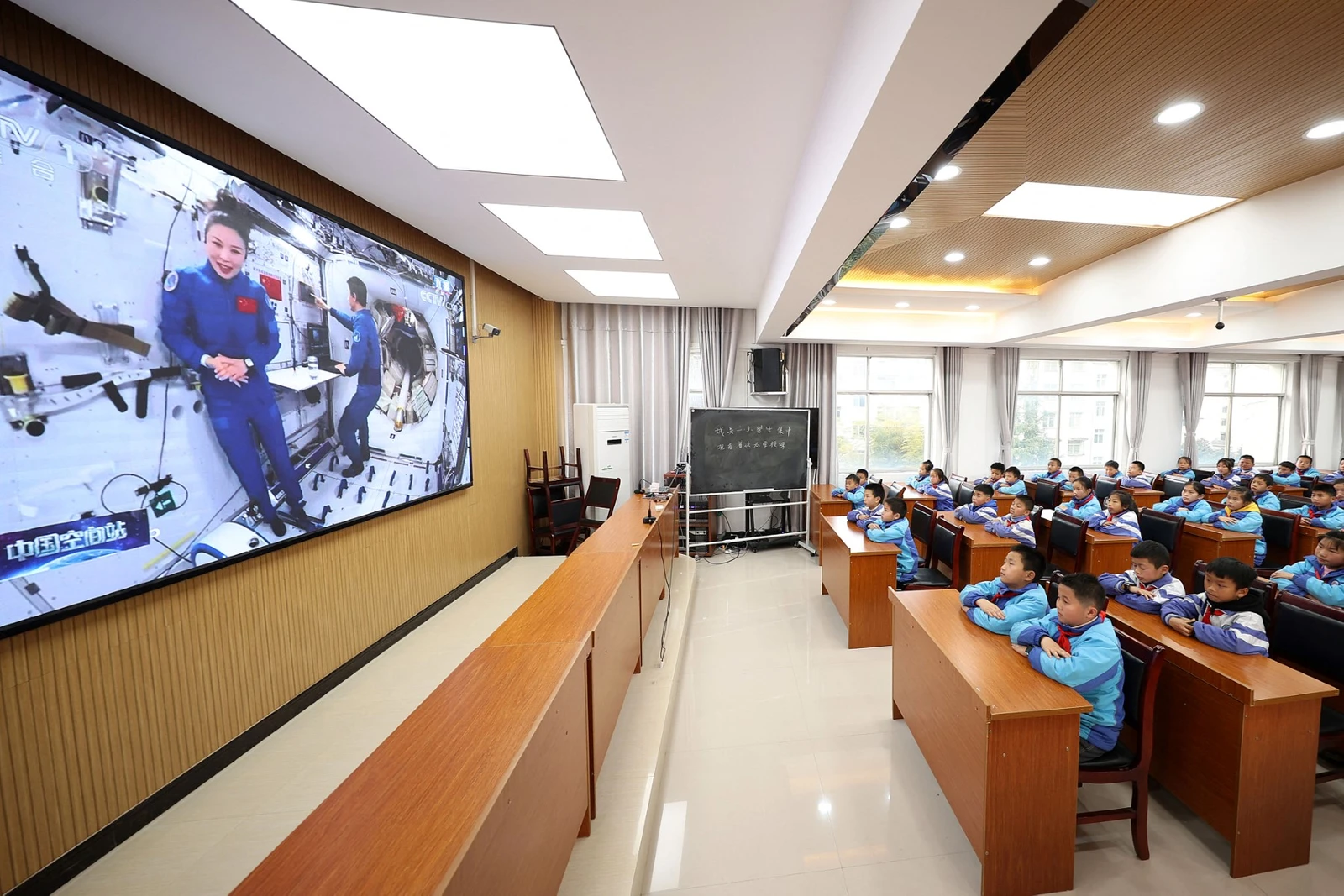
A new chapter in Pakistan’s space exploration journey is on the horizon, as a Pakistani astronaut prepares to become the first foreign national to visit China’s Tiangong space station. The historic mission reflects the growing scientific and technological partnership between Pakistan and China, opening new opportunities for international cooperation beyond Earth.
According to the China Manned Space Agency (CMSA), the Pakistani astronaut will join the Shenzhou-24 crew for a mission into orbit. The announcement was made on Saturday through the agency’s social media channels. Although an exact launch date has not yet been confirmed, the mission is expected to take place before the end of 2026.
The astronaut, who will serve as a payload specialist, is expected to participate in a short-duration spaceflight before returning to Earth aboard the Shenzhou-23 spacecraft. The spacecraft docked with China’s Tiangong space station in May, according to the agency’s announcement.
While the Chinese space agency has not officially revealed the selected astronaut’s identity, two Pakistani candidates, Muhammad Zeeshan Ali and Khurram Daud, were announced in April as the individuals chosen to begin astronaut training in China.
The development follows an important agreement signed by Pakistan and China in February 2025, establishing a training programme under which Pakistani astronauts would receive preparation for future space missions. The agreement marked a significant step in strengthening cooperation between the two countries in science, technology and space exploration.
Under the arrangement, Pakistani astronauts who complete their training in China are expected to participate in short-term missions alongside Chinese astronauts over the coming years. The programme represents an opportunity for Pakistan to develop its human spaceflight capabilities while gaining valuable experience from China’s expanding space programme.
China has made substantial investments in its space ambitions, steadily advancing its capabilities and strengthening its position in the global space industry. One of its major objectives is to send astronauts to the Moon by 2030, an ambitious target that reflects the country’s long-term commitment to space exploration.
For Pakistan, the upcoming mission represents more than an international partnership. It is an opportunity to inspire a new generation of scientists, engineers, researchers and young people who dream of contributing to humanity’s exploration of space.
Pakistan and China have maintained close diplomatic, economic and strategic relations for decades, frequently describing their relationship as an all-weather friendship. China remains Pakistan’s largest trading partner and an important foreign investor, with cooperation extending across infrastructure, technology, education and scientific development.
As preparations continue, the upcoming mission could become a defining moment for Pakistan’s presence in international space exploration. It will also demonstrate how collaboration between nations can create opportunities that extend far beyond national borders.
For aspiring young scientists in Pakistan, the message is clear: the possibilities of reaching beyond Earth are becoming increasingly real.