
Over a dozen world leaders and dignitaries have arrived in Tuvalu, one of the world’s most vulnerable nations to climate change, to witness first-hand how rising temperatures and seas are transforming life across the tiny Pacific island country.
The visit took place alongside the Pacific “pre-COP” gathering hosted by Fiji, where regional leaders are pushing for stronger global attention on the climate crisis. The discussions are part of the preparations for COP31, the United Nations-backed climate summit scheduled to take place in Turkey next month.
For Tuvalu, climate change is not a distant threat or a future concern. It is already affecting homes, food supplies, marine ecosystems and the country’s long-term future.
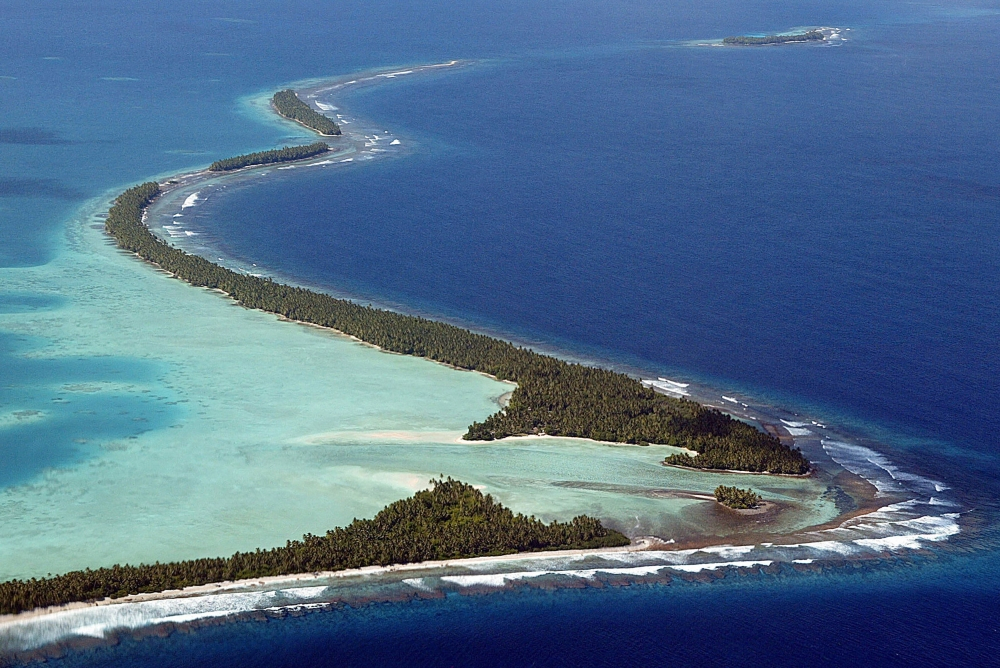
Tuvalu is home to around 10,600 people, and much of its land sits only a few metres above sea level. With rising waters continuing to threaten the islands, authorities have already begun considering plans to relocate the population if parts of the country become uninhabitable.
Fourteen leaders, including Australian Prime Minister Anthony Albanese, Pacific leaders and other international representatives, arrived in the capital Funafuti. They were welcomed by hundreds of local residents wearing traditional clothing and flower tiaras, with umbrellas protecting them from heavy rain.
The visiting delegation is expected to tour the Tuvalu Coastal Adaptation Project, a major land reclamation initiative designed to help protect communities from rising sea levels. The programme will also include a dialogue session and a farewell ceremony.
Tuvalu remains one of the least visited countries in the world, but its geographical reality has placed it at the centre of the global climate conversation. The highest point around Funafuti is only about two metres above sea level, leaving communities particularly exposed to rising oceans and extreme weather.
Scientists have warned that the situation is becoming increasingly serious. Two of Tuvalu’s nine coral atolls have already experienced significant inundation, while researchers fear that continued warming could make large parts of the archipelago difficult or impossible to inhabit by the end of this century.
One of the most devastating examples came in 2024, when a severe marine heatwave destroyed an estimated 99.9 percent of the coral that helped build and maintain Tuvalu’s islands.
Marine biologist Austin Bowden-Kerby, who documented the damage during a visit last year, described seeing extensive areas of dead coral across the lagoon. The loss is particularly alarming because coral reefs play a crucial role in protecting islands while also supporting marine life and local food systems.
The impact is also being felt by Tuvalu’s fishing communities. Local scientist Rajneel Singh said traditional fish catches have changed, with species that were once commonly caught becoming less frequent and fish sizes declining.
For generations, Tuvalu’s communities have depended heavily on the surrounding ocean for food and livelihoods. As warming seas disrupt marine ecosystems, the consequences extend far beyond the environment, touching household food security, culture and the future of local communities.
Tuvalu’s Climate Minister Maina Vakafua Talia said the visit is intended to give international leaders a direct understanding of what climate change looks like for people living on the frontline. For Tuvalu, the decisions made at international climate negotiations are not abstract political discussions. They can directly influence whether communities can continue living on their ancestral islands.
The visit sends a powerful message ahead of COP31: countries facing the greatest climate risks are already living with consequences that much of the world is still debating. For Tuvalu, every fraction of additional warming matters, and every decision made at global climate negotiations could have consequences measured not only in economic terms, but in homes, livelihoods, ecosystems and the future of an entire nation.