
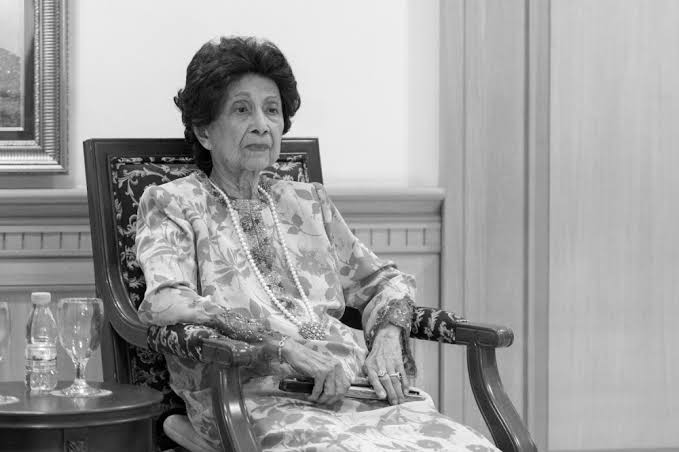
Malaysia is mourning the passing of Tun Dr Siti Hasmah Mohd Ali, the wife of former prime minister Tun Dr Mahathir Mohamad, who died at the age of 100 at the National Heart Institute (IJN) in Kuala Lumpur on Monday, September 28, 2026.
Her passing was confirmed by her son, Tan Sri Mokhzani Mahathir. Reports said she died at about 9.20am, bringing to a close a remarkable century-long life closely associated with medicine, public service, family and Malaysia’s national development.
News of her death also reached Parliament during a townhall session, where the announcement came as a surprise to those present. A brief Islamic prayer was subsequently held in her memory, reflecting the immediate sense of loss following the news.
Born in Klang, Selangor, on July 12, 1926, Dr Siti Hasmah was among the early Malay women to pursue a career in medicine. She graduated from the King Edward VII College of Medicine in Singapore before beginning a professional journey that would see her contribute significantly to Malaysia’s public healthcare sector.
Her early medical career was particularly focused on public health. She worked in areas including maternal and child healthcare and served communities beyond the major urban centres. Her work reflected a period when expanding access to healthcare was an important part of Malaysia’s social development.
In 1956, she married Tun Dr Mahathir Mohamad. Their marriage continued for seven decades and saw them raise seven children. Among their children are social activist Datin Paduka Marina Mahathir, Tan Sri Mokhzani Mahathir and Datuk Seri Mukhriz Mahathir.
As the wife of Tun Dr Mahathir during his two periods as prime minister, from 1981 to 2003 and again from 2018 to 2020, Dr Siti Hasmah became a familiar national figure. Yet beyond her public role, her identity was also shaped by her profession as a doctor and her involvement in health, welfare and community activities.
Her contribution to Malaysian society extended beyond the formal responsibilities associated with being a prime minister’s wife. Her medical background gave her a particular connection to issues surrounding public health, women, children and community wellbeing, while her long public life placed her among the country’s most recognisable national figures.
Prime Minister Datuk Seri Anwar Ibrahim announced that Dr Siti Hasmah would be accorded a state funeral, with the Chief Secretary to the Government and the Chief of Defence Forces instructed to assist with the arrangements. Anwar also conveyed condolences to Tun Dr Mahathir and the entire family.
Later announcements stated that she would be laid to rest at Pusara Negara in Precinct 20, Putrajaya. Her remains were taken to As-Syarif Mosque in Seri Kembangan for funeral preparations and public last respects, with funeral prayers scheduled after Asar before burial.
For many Malaysians, the passing of Dr Siti Hasmah represents more than the loss of a former prime minister’s wife. It marks the end of a remarkable chapter in the life of a woman who entered medicine at a time when opportunities for Malay women in the profession were far more limited, served in public healthcare and remained part of the nation’s public life for generations.
At 100, Dr Siti Hasmah leaves behind a family, a medical legacy and memories shared by generations of Malaysians. Her story is one of a doctor, mother, wife and public figure whose life unfolded alongside some of the country’s most significant chapters.
As the nation remembers her, condolences have been extended to Tun Dr Mahathir Mohamad, her children and the wider family. May her family be granted strength and comfort during this difficult time.
Al-Fatihah.