
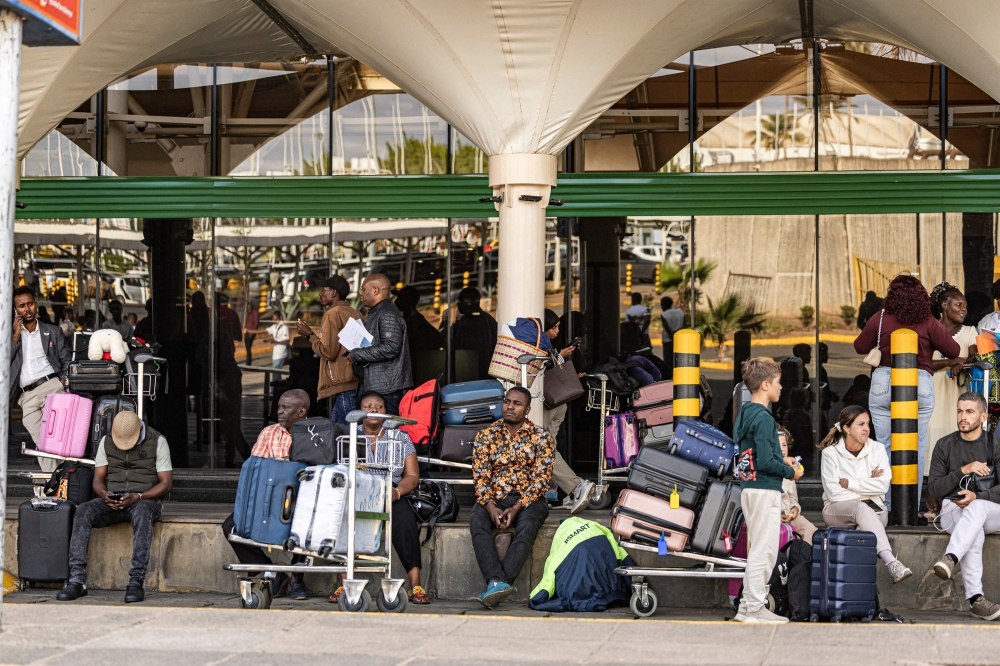
Hundreds of passengers were left stranded overnight at Kenya’s main international airport as an ongoing strike by aviation workers entered its second day, causing cancelled flights, long delays and growing frustration among travellers.
Jomo Kenyatta International Airport (JKIA) in Nairobi is one of East Africa’s key aviation hubs and plays an important role in Kenya’s tourism and business sectors. But once again, industrial action has disrupted operations, leaving passengers uncertain about when they will be able to continue their journeys.
Several flights were cancelled on Sunday, while hundreds of travellers remained at the airport for hours. Local media reports said some passengers had no choice but to spend the night at the airport as the disruption continued.
Kenya Airways said flights were still operating but were experiencing average delays of between two and three hours.
For travellers, however, the delays have meant more than simply waiting at the airport. Plans have been disrupted, connections have become uncertain and passengers have been left searching for reliable updates.
“Nothing is happening, updates are reaching us late. It’s ruining our itinerary,” 22-year-old traveller William Obino told AFP, capturing the frustration felt by many passengers caught in the disruption.
At the centre of the strike is a dispute involving the Kenya Aviation Workers Union (KAWU) and the Kenya Airports Authority (KAA).
KAWU says workers are taking industrial action because of what it describes as a longstanding failure by the Kenya Airports Authority to finalise a new collective bargaining agreement.
The union is also protesting the use of volunteers from Kenya’s National Youth Service to carry out airport-related duties.
The Kenya Airports Authority said it was working with aviation agencies, airlines and other stakeholders to manage the situation, reduce disruption and support the continued flow of airport operations.
For passengers, the priority is simple: clear information, safe travel and a return to normal operations.
The latest disruption is also a reminder of how quickly industrial disputes within critical transport infrastructure can affect ordinary people. A delay at an airport can mean a missed connection, a cancelled hotel booking, a disrupted business meeting or an important family moment put on hold.
As negotiations and efforts to stabilise airport operations continue, travellers are being left waiting for one thing above all else: certainty about when they can finally get moving again.