
Iran witnesses one of its largest public gatherings in decades
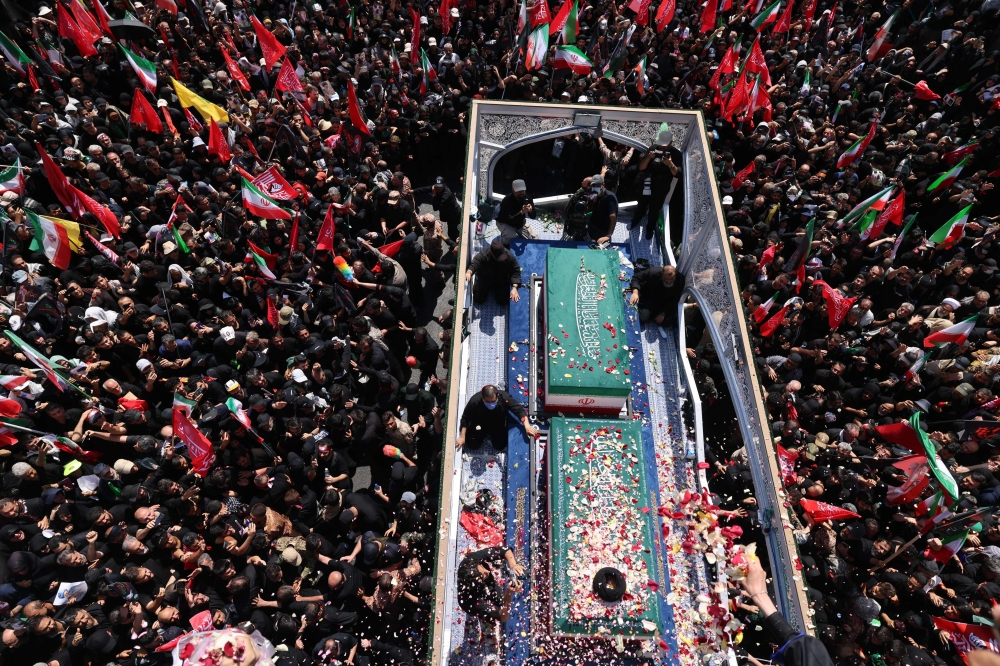
Tehran became the center of global attention as millions of Iranians poured into the streets to bid farewell to former Supreme Leader Ali Khamenei. The extraordinary funeral procession transformed the Iranian capital into a sea of mourners, with major roads and public squares packed with people paying their final respects.
Although officials have not released an official attendance figure, photographs and video footage showed crowds stretching for kilometers, making it one of the largest public gatherings in modern Iranian history. Many observers compared the turnout to the funeral of Ayatollah Ruhollah Khomeini in 1989, an event remembered as one of the biggest funeral processions ever recorded.
A nation united in grief
For two days, Khamenei’s body lay in state at Tehran’s Grand Mosalla religious complex, where thousands visited to offer prayers and condolences before the funeral procession officially began.
As the coffin moved slowly through the capital, flower petals covered its surface while mourners waved Iranian flags and chanted religious slogans. Many people carried portraits of both Ali Khamenei and his successor, Mojtaba Khamenei, reflecting a mixture of remembrance and hope for continuity.
The funeral also served as a moment for Iran to demonstrate national unity following weeks of military conflict involving Israel and the United States.
Authorities tighten security after lessons from history
Iranian officials implemented extensive security measures throughout the ceremonies.
The government remained cautious due to memories of the chaotic 1989 funeral of Ayatollah Ruhollah Khomeini, when overwhelming crowds caused deadly stampedes that resulted in multiple deaths and thousands of injuries.
To reduce similar risks, organizers installed reinforced barriers, carefully managed crowd movement, and restricted access around the coffin. Emergency medical teams and security personnel remained stationed across the procession route, while Tehran’s airspace was temporarily closed during the ceremonies.
Large vehicles sprayed water across sections of the crowd to help people cope with the intense summer heat, while volunteers distributed drinking water, flags, and commemorative photographs.
Emotional scenes across Tehran
People of all ages gathered along nearly 20 kilometers of the funeral route.
Many mourners described the ceremony as one of the most emotional events they had ever witnessed.
Some participants expressed that the turnout reflected national solidarity during a difficult period, while others viewed the funeral as a symbol of resistance amid ongoing regional tensions.
Iranian media also reported that symbolic displays, including effigies of former U.S. President Donald Trump, appeared in parts of the capital, reflecting the political emotions surrounding the event.
Former Iranian President Mahmoud Ahmadinejad was among the prominent political figures attending the funeral.
Questions remain over Iran’s leadership
Despite the enormous public gathering, one notable absence attracted widespread attention.
Mojtaba Khamenei, who assumed leadership shortly after his father’s death, has yet to make a public appearance. Officials previously stated that he sustained injuries during the airstrikes that killed Ali Khamenei, though no official update has clarified his medical condition.
His absence has fueled speculation regarding his recovery while Iranian authorities continue emphasizing governmental stability.
Meanwhile, several senior military officials appeared publicly during the ceremonies, including Revolutionary Guards commander Ahmad Vahidi and Quds Force commander Esmail Qaani, both making rare appearances following weeks of conflict.
Funeral ceremonies extend beyond Tehran
The farewell ceremonies will continue beyond the capital over several days.
Additional memorial events are scheduled in the religious city of Qom before moving to the holy Iraqi cities of Najaf and Karbala. The final burial is expected to take place in Mashhad, Ali Khamenei’s hometown in northeastern Iran.
These ceremonies are expected to attract additional crowds as supporters continue paying tribute to one of Iran’s most influential political and religious leaders.
Regional tensions remain high
While a ceasefire has temporarily paused the recent conflict involving Iran, Israel, and the United States, uncertainty continues across the Middle East.
Iranian officials have repeatedly emphasized that the country remains prepared to respond if hostilities resume. During the funeral, many supporters voiced demands for retaliation, reflecting the strong emotions that continue to shape the political climate.
For decades, Ali Khamenei maintained a firm stance against Western influence while supporting regional allies across the Middle East, including Hezbollah and Hamas, whose representatives also attended the funeral ceremonies.
A defining moment in Iran’s modern history
The funeral of Ali Khamenei represents far more than the passing of a political leader. It marks the closing of a significant chapter in Iran’s modern history while opening another filled with uncertainty, leadership transition, and geopolitical challenges.
The immense turnout demonstrated the emotional impact Khamenei had on many Iranians and highlighted the government’s determination to present an image of national unity during a period of regional instability.
As millions continue mourning, global attention now turns toward Iran’s future leadership, regional diplomacy, and the direction the country will take in the months ahead.