
The world today stands at a fragile crossroads. Conflicts that ignite in one region no longer remain confined to borders; they ripple across continents, affecting economies, political stability, and the safety of ordinary people. In this tense global atmosphere, Malaysia has taken a clear and urgent stance. Prime Minister Datuk Seri Anwar Ibrahim has strongly condemned military attacks against Iran and warned that unilateral actions violating international law threaten not only regional stability but the entire framework of global peace.
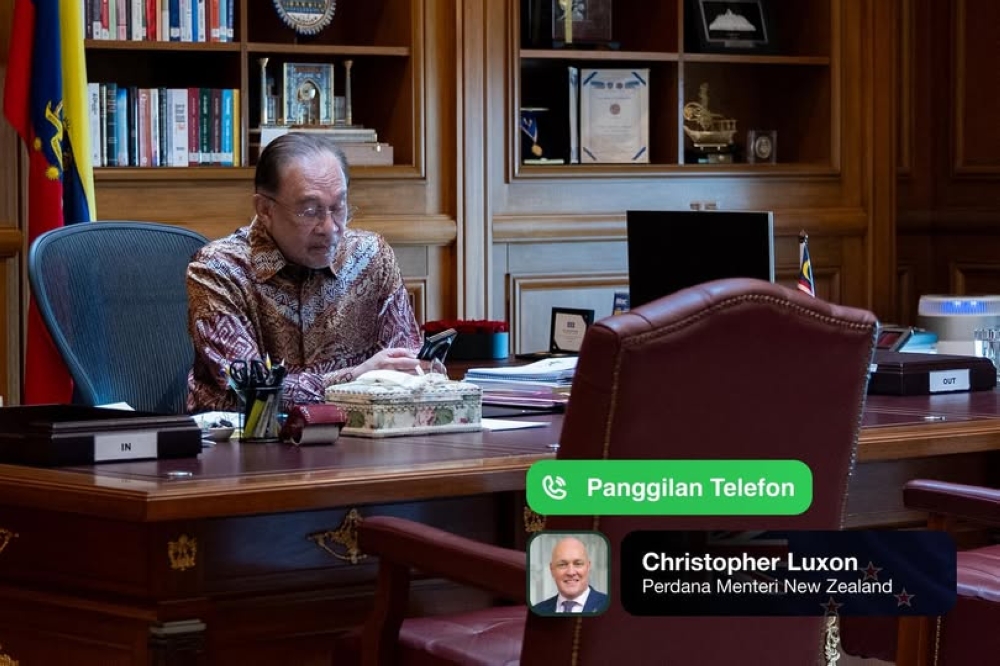
This message was reinforced during a critical telephone conversation between Malaysia’s Prime Minister and New Zealand’s Prime Minister Christopher Luxon. Their exchange was not merely diplomatic routine. It was a serious dialogue reflecting the growing anxiety among nations about escalating tensions in West Asia and the far-reaching consequences that such turmoil could unleash on global security, economic stability, and energy markets.
The conversation highlighted an uncomfortable reality that the international community cannot ignore. Conflicts between powerful regional actors such as Iran and Israel carry consequences that go far beyond political disputes. When military actions escalate, they create chain reactions that disturb global markets, disrupt supply chains, increase fuel prices, and heighten geopolitical uncertainty. These outcomes affect not only governments but also businesses, families, and workers across the world.
Malaysia’s position is direct and principled. The government has reiterated its strong condemnation of military aggression against Iran and its rejection of unilateral actions that violate international law. Such acts undermine the international system that was designed to prevent chaos and protect the sovereignty of nations.
For Malaysia, this is not just a political statement. It is a call for responsibility. The Prime Minister emphasized that the global community must push for an immediate ceasefire, ensure the protection of civilians, and prioritize diplomatic solutions over military confrontation. Without these steps, the cycle of retaliation could spiral into a broader regional conflict with devastating global consequences.
The urgency of this position becomes clearer when one examines how interconnected the world has become. Energy markets, trade routes, financial systems, and security alliances are tightly woven together. A spark in one region can quickly trigger economic tremors thousands of miles away.
During the conversation, both leaders examined how the Iran–Israel tensions could affect New Zealand’s energy sector. Rising fuel prices are already placing pressure on domestic economies worldwide, and countries dependent on imported energy are particularly vulnerable. The cost of fuel does not only affect transportation. It increases the cost of manufacturing, agriculture, logistics, and everyday living expenses.
When energy prices surge, inflation follows. When inflation rises, purchasing power weakens. Families struggle, businesses tighten operations, and governments face mounting pressure to stabilize their economies.
This is precisely why the issue of conflict in West Asia cannot be treated as a distant geopolitical problem. It is an immediate economic and humanitarian challenge with global implications.
In response to these growing pressures, New Zealand has been taking proactive steps to strengthen its energy security and accelerate its transition toward renewable energy sources. Prime Minister Anwar Ibrahim welcomed these efforts, recognizing that long-term energy stability is essential for reducing vulnerability to geopolitical shocks.
Energy transition is no longer simply an environmental ambition. It has become a strategic necessity. Countries that diversify their energy sources and invest in renewable infrastructure will be better equipped to withstand disruptions caused by international conflicts.
Malaysia, like many nations, understands the importance of balancing economic development with sustainable energy solutions. Cooperation between nations on renewable technology, clean energy investment, and resilient supply chains will play a crucial role in protecting economies from future crises.
Beyond the immediate concerns of energy and security, the conversation between the two leaders also reaffirmed the strength of Malaysia and New Zealand’s bilateral relationship. Under the framework of their Strategic Partnership, both countries remain committed to expanding collaboration in trade, investment, and energy cooperation.
Strong partnerships between nations are vital during periods of global uncertainty. Diplomatic cooperation provides a platform for coordinated responses to crises, enabling countries to support each other through economic disruptions and geopolitical tensions.
The leaders emphasized that maintaining close communication and collaboration will be essential as the world navigates this turbulent period. Dialogue between nations can prevent misunderstandings, reduce tensions, and open pathways toward peaceful resolutions.
Yet diplomacy alone is not enough if the global community fails to act with urgency.
The conflict between Iran and Israel represents a dangerous flashpoint. Without immediate efforts to de-escalate tensions, the risk of wider regional conflict becomes increasingly real. Such a conflict could destabilize trade routes, disrupt global oil supplies, and intensify political divisions across the international system.
History has repeatedly shown that wars rarely remain contained. They spread through alliances, retaliations, and economic consequences that draw more actors into the conflict.
This is why Malaysia’s call for an immediate ceasefire carries such significance. It reflects a broader appeal to the international community to prioritize peace before the situation becomes irreversible.
The protection of civilians must remain at the center of this conversation. Military confrontations inevitably lead to humanitarian crises, displacement, and the loss of innocent lives. The world cannot afford to normalize violence as a tool of political negotiation.
Instead, leaders must strengthen diplomatic channels, support international mediation efforts, and uphold the principles of international law.
Malaysia’s stance sends a powerful message that smaller and medium-sized nations also play a crucial role in shaping the global dialogue around peace and security. Their voices reinforce the importance of multilateral cooperation and the need to resist actions that undermine international stability.
The conversation between Anwar Ibrahim and Christopher Luxon therefore represents more than a diplomatic exchange. It symbolizes a growing recognition among global leaders that the stakes are too high to ignore.
Every escalation in West Asia carries the potential to reshape economic landscapes, disrupt energy markets, and threaten international security. The longer tensions continue, the greater the risk of global instability.
This moment demands decisive leadership, courageous diplomacy, and a renewed commitment to peace.
Malaysia’s call for a ceasefire is not simply a political statement. It is a reminder that in an interconnected world, the consequences of conflict reach far beyond the battlefield.
Governments, institutions, and citizens must recognize the urgency of this moment. The path forward must prioritize dialogue over destruction, diplomacy over aggression, and cooperation over confrontation.
The future of global security depends on it.